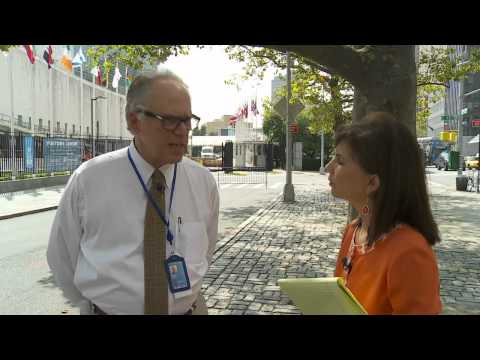
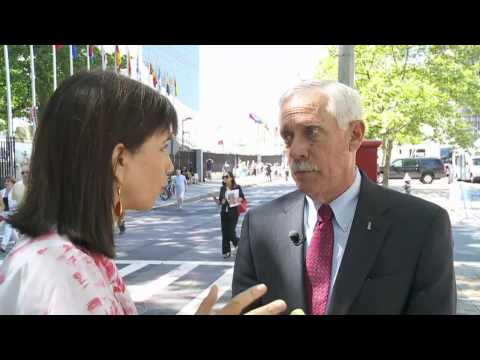
The Daily Show with Ginny Simone 7/22/10

Published on July 23, 2010
Duration: 11:56

This video discusses the ongoing negotiations for an Arms Trade Treaty (ATT) at the United Nations, focusing on the challenges of defining scope and exclusions. Key points include the debate over broad versus narrow definitions of arms, the potential exclusion of sporting and antique firearms, and the persistent issue of self-defense not being explicitly addressed. The discussion highlights differing national perspectives, particularly between countries like Mexico pushing for broad definitions and others advocating for specific exclusions, and touches upon the practical difficulties of regulating ammunition.

Quick Summary

The Arms Trade Treaty (ATT) negotiations face significant challenges in defining the scope of arms to be regulated, with ongoing debates between broad and narrow definitions. A key point of contention is the potential exclusion of sporting, recreational, and antique firearms. Notably, the concept of self-defense has not been explicitly addressed, which is expected to be a major fight towards the end of the negotiations.

Chapters

  1. 00:00Treaty Outline and Scope Debate
  2. 00:30Defining Arms: Broad vs. Narrow
  3. 00:52Exclusions for Sporting and Antique Firearms
  4. 01:33Countries Pushing for Exclusions
  5. 02:07Small Arms and Light Weapons Definition Challenge
  6. 02:22Mexico's Broad Concept and US Response
  7. 03:00Definition as a Sticking Point
  8. 03:28Treaty as a Trade Agreement
  9. 03:57UK Defense Industry Perspective
  10. 04:54Civilian Firearms vs. Military Systems
  11. 05:16Ammunition as a Major Sticking Point
  12. 05:51Russia's Opposition and Concerns
  13. 06:27Pakistan and Mexico's Role
  14. 06:53US Stance: Agreement and Practicality
  15. 07:13Fighting Illicit Trade vs. Treaty
  16. 07:39No Mention of Self-Defense
  17. 07:56UN Psychology vs. US Psychology
  18. 08:17US Position on Self-Defense
  19. 08:33The Fight Over Self-Defense
  20. 08:39UN Negotiation Pace and Style
  21. 09:30Weak Chairs and Long Speeches
  22. 10:02US Official's Exchange with Mexico
  23. 10:35Rebecca's Departure and Focus Shift
  24. 11:39Overall Feeling on Treaty Progress

Frequently Asked Questions

What is the main challenge in the Arms Trade Treaty negotiations?

The primary challenge in the Arms Trade Treaty negotiations is defining the scope of the treaty, particularly establishing clear definitions for what constitutes 'arms' and deciding whether to include exclusions for items like sporting firearms, recreational firearms, and antique guns. The debate between broad and narrow definitions is a significant sticking point.

Is self-defense addressed in the Arms Trade Treaty discussions?

Currently, self-defense has not been explicitly mentioned or included in the discussions surrounding the Arms Trade Treaty. This is noted as a philosophical difference at the United Nations, contrasting with the perspectives of countries like the United States, and is expected to be a major point of contention towards the end of negotiations.

Which countries are actively involved in the Arms Trade Treaty debates?

Key countries actively involved in the Arms Trade Treaty debates include Mexico and the Netherlands, who advocate for broad definitions. Australia and New Zealand are noted for supporting specific exclusions. Russia and Pakistan also play significant roles, with Pakistan and Mexico frequently taking the floor to express their positions.

What are the practical difficulties in regulating ammunition under the ATT?

Regulating ammunition under the Arms Trade Treaty presents significant practical challenges. Experts and industry professionals argue that it is nearly impossible to create an effective international regulatory regime that can accurately track ammunition due to its widespread use and production.

More 2nd Amendment & Law Videos You Might Like

More from NRA

View all →