Filaments I Use On A Regular Basis

Published on March 13, 2022
Duration: 22:07

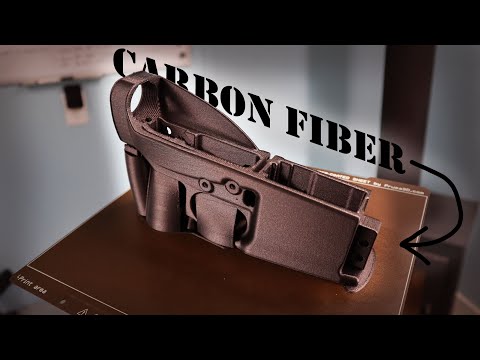
This video provides an expert-level overview of various 3D printing filaments, focusing on their suitability for functional parts, particularly firearm components like lower receivers. The instructor, with extensive testing experience, details the properties, pros, and cons of PLA Plus, Carbon Fiber Nylon, Glass Fiber Nylon, Polycarbonate blends, and TPU. He emphasizes Push Plastic Carbon Fiber Nylon as a top recommendation for its balance of strength, heat resistance, and printability, while cautioning against certain other materials like PETG due to poor mechanical properties.

Quick Summary

For strong, functional 3D printed parts like firearm lower receivers, Push Plastic Carbon Fiber Nylon is the top recommendation due to its excellent balance of heat resistance, impact strength, and printability. It offers a superior surface finish and durability compared to many other materials, making it ideal for demanding applications.

Chapters

  1. 00:00Introduction to Filaments
  2. 00:52PLA and PLA Plus Explained
  3. 02:02Plain PLA Recommendations
  4. 02:43PLA Plus Recommendations
  5. 05:01Carbon Fiber Nylon for Heat Resistance
  6. 05:53Carbon Fiber Nylon Examples
  7. 08:57Glass Fiber Filled Nylon
  8. 10:45Plain Nylon Discussion
  9. 13:26Polycarbonate Filaments
  10. 16:40TPU Flexible Filament
  11. 17:48Filament Summary & Recommendations
  12. 19:07Niche Filament Uses
  13. 19:43Filaments to Avoid (PETG, Cheap PLA Plus)
  14. 21:22Other Filaments & Conclusion

Frequently Asked Questions

What is the best 3D printing filament for strong, functional parts like firearm lower receivers?

The instructor highly recommends Push Plastic Carbon Fiber Nylon for its excellent balance of strength, heat resistance, impact resistance, and superior surface finish. It's considered the go-to filament for durable, functional components that need to withstand stress and temperature.

What are the key differences between PLA and PLA Plus filaments?

Plain PLA tends to be brittle with poor impact resistance, suitable for non-structural items. PLA Plus, or Performance PLA, is engineered for much higher impact resistance and greater plastic deformation, making it far more durable and less prone to cracking under stress.

Why is Carbon Fiber Nylon preferred over Glass Fiber Nylon for functional parts?

Carbon Fiber Nylon generally offers superior tensile strength, better layer adhesion, a smoother surface finish, and comparable or better impact resistance than Glass Fiber Nylon. This makes it a more reliable choice for demanding applications.

What are the drawbacks of using PETG filament for structural 3D prints?

PETG is strongly discouraged for structural applications due to its weakness, poor tensile strength, and horrible impact resistance, causing it to shatter easily. Despite printing nicely, its mechanical properties are considered inadequate for functional parts.

More General Videos You Might Like

More from Hoffman Tactical

View all →