History of WWI Primer 003*: French 1892 Documentary

Published on July 25, 2023
Duration: 100:26

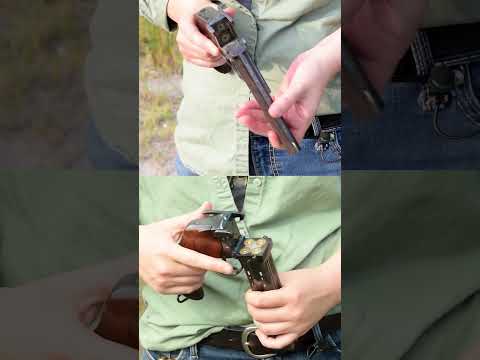
This video provides an in-depth historical and technical examination of the French Model 1892 revolver. It details its development from earlier French designs, its mechanical features including the Fagnoux-derived lockwork and swing-out cylinder, and its service life through World War I and beyond. The presenter highlights the revolver's strengths, such as its safety features and ease of maintenance, while also discussing its limitations, particularly the anemic 8mm cartridge.

Quick Summary

The French Model 1892 revolver, adopted in 1892, fires 8mm Ordnance (Lebel) ammunition and features a Fagnoux-derived triple-action lockwork with a rebounding hammer for safety. Its swing-out cylinder and 'ability gate' system enhance usability and prevent accidental discharge during loading.

Chapters

  1. 00:00Introduction: French Model 1892 Revolver
  2. 00:23Overview and Specifications
  3. 00:57Ammunition: 8mm Ordnance (Lebel)
  4. 01:02Action Type: Triple Action
  5. 01:10Sponsor Segment: Ballistol CLP
  6. 03:19Origins: Post-1870 Franco-Prussian War Context
  7. 03:53Evolution: From Chassepot to Model 1873
  8. 05:57Shortcomings of the Model 1873
  9. 08:26Development of the Model 1885 Prototype
  10. 10:44Fagnoux Lockwork Explained
  11. 13:30Fagnoux's Auto Rebound Feature
  12. 15:50Further Lockwork Refinements (Warrant, Kaufman)
  13. 17:42Model 1885 Lockwork Modifications
  14. 20:25Impact of Smokeless Powder and Boulanger
  15. 22:12Model 1885 to 8mm Adaptation
  16. 25:22Comparative Tests with Swiss Model 1882
  17. 29:06Model 1887 Trials and Issues
  18. 31:17Development under Jules Barre: Model 1889
  19. 33:38Influence of the Colt 1889 'New Navy'
  20. 35:21Model 1892 'Pump' Prototypes
  21. 36:39Final Changes and Adoption of Model 1892
  22. 39:40Detailed Look at the French Model 1892
  23. 41:12Gate Loading Mechanism and Safety
  24. 43:02Cylinder Crane and Friction Spring
  25. 43:44Locking Bolt and Cylinder Alignment
  26. 44:52Disassembly Procedure
  27. 45:53Lockwork Details: Fagnoux, Warrant, Kaufman
  28. 48:48French Specifics: Ability Gate and Rollers
  29. 51:00Animation: Model 1892 Mechanism
  30. 55:10Production Numbers and Cost
  31. 55:38Cartridge Development: Black Powder to Smokeless
  32. 56:15Serial Numbering and Production Blocks
  33. 57:57Service Life: Army, Navy, Gendarmerie
  34. 58:37Foreign Adoption: Romania
  35. 59:00Service in Conflicts: WWI and Beyond
  36. 60:13Finish Variations: Blued to Black Paint
  37. 60:54Historical Footnote: General Boulanger's Suicide
  38. 62:02Acknowledgments and Credits
  39. 62:41Guest Impressions: May's Opinion
  40. 64:05Visual Comparison: Model 1892 vs. Swiss 1882
  41. 67:02Grip Ergonomics Comparison
  42. 68:02Gate Loading and Ejector Discussion
  43. 69:05Concluding Thoughts

Frequently Asked Questions

What caliber is the French Model 1892 revolver?

The French Model 1892 revolver is chambered in 8mm Ordnance ammunition, often referred to as 8mm Lebel. This caliber was chosen to align with the development of the 8mm Lebel rifle.

What are the key mechanical features of the French Model 1892?

The Model 1892 features a Fagnoux-derived triple-action lockwork with a rebounding hammer for safety. It also incorporates a swing-out cylinder for easier loading/unloading and an 'ability gate' system that prevents firing when the gate is open.

How is the French Model 1892 disassembled for cleaning?

Disassembly involves removing a single slotted screw on the right side of the frame to release the captive side plate and grip. This provides access to the internal lockwork for cleaning and maintenance.

What was the service life of the French Model 1892 revolver?

The French Model 1892 was adopted in 1892 and served as the official sidearm for French officers and various roles through World War I and World War II. It was officially decommissioned in 1948.

More General Videos You Might Like

More from C&Rsenal

View all →