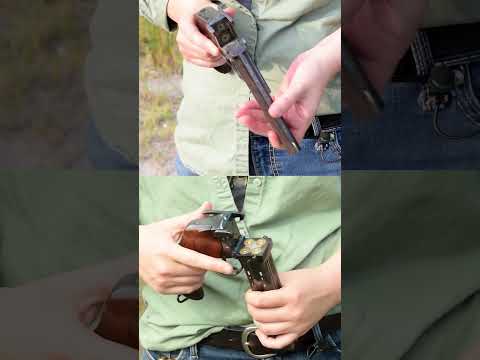
History of WWI Primer 082: The Kropatschek Pt.1 Documentary

Published on August 14, 2018
Duration: 87:47

This video details the history and mechanics of the Kropatschek rifle, focusing on its development from earlier designs like the Verndl-Hall. It covers its adoption by France and Portugal, its technical specifications, and a detailed breakdown of its action, including disassembly. The presenter highlights the rifle's innovative features for its time, such as its tubular magazine and selector switch for single-shot or repeating fire, while also noting its limitations and the reasons for its eventual obsolescence.

Quick Summary

The Kropatschek rifle, a significant repeating firearm of the late 19th century, featured a tubular magazine and a selector for single-shot or repeating fire. Despite its influence on later designs like the French Lebel, its non-controlled feed system and other mechanical limitations meant it was often surpassed by newer technologies.

Chapters

  1. 00:00Introduction: The Forgotten King of Repeating Rifles
  2. 00:24Introducing the Portuguese Kropatschek M1886
  3. 01:00The Kropatschek's Underappreciated Influence
  4. 04:10Episode Structure: France, Austria, Germany Focus
  5. 04:45The Origins: Joseph Verndl and the Verndl-Hall Rifle
  6. 08:09Ferdinand von Worth's Repeating Carbine
  7. 10:25Detailed Look at the Verndl-Hall Carbine
  8. 14:07Kropatschek Bolt Disassembly
  9. 16:47Magazine and Stock Assembly
  10. 19:26How the Kropatschek Action Works
  11. 23:41Kropatschek Loading and Firing Demonstration
  12. 28:42Alfred Ritter von Kropatschek: The Inventor
  13. 31:02Kropatschek's Early Designs and Trials
  14. 35:38Austrian Trial Reports: Kropatschek vs. Verndl
  15. 37:51French Interest and the Kropatschek
  16. 41:42Later Austrian Trials and the Kropatschek
  17. 43:50The Portuguese Kropatschek: Final Version
  18. 44:10Kropatschek Action Details: Magazine Cutoff
  19. 49:26Kropatschek Bolt Underside Details
  20. 50:30Kropatschek Rifle External Features
  21. 53:23Kropatschek Animation: Loading and Firing Cycle
  22. 58:47Kropatschek Service History (Pre-Portugal)
  23. 01:06Kropatschek in French Service: Tonkin Campaign
  24. 01:08French Kropatschek 1878 Marine and 1885/86 Variants
  25. 01:10Kropatschek's Influence on Later Designs
  26. 01:11Inventor Alfred von Kropatschek's Career
  27. 01:06Kropatschek's Influence on Later Designs
  28. 01:06Mae's Firing Impressions: Kropatschek 1886
  29. 01:11Ergonomics and Handling of the Kropatschek
  30. 01:14Shooting Experience: Recoil and Trigger

Frequently Asked Questions

What is the Kropatschek rifle and why is it significant?

The Kropatschek rifle, particularly the Model 1886, was an influential repeating rifle developed in the late 19th century. It evolved from earlier designs and was adopted by countries like France and Portugal, influencing later firearm designs such as the Lebel rifle and the Mauser 71/84.

How does the Kropatschek rifle's magazine system work?

The Kropatschek utilizes a tubular magazine fed by a spoon-shaped elevator. A selector switch allows for single-shot or repeating fire. However, it lacks controlled feed, making it sensitive to cartridge length and prone to jams if not loaded correctly.

What were the main challenges or drawbacks of the Kropatschek rifle?

Key drawbacks included its non-controlled feed system, which could lead to malfunctions, and its relatively complex action for the time. The sights were also noted as being small and flimsy. Despite its innovations, it was often outcompeted by newer designs with superior loading mechanisms.

Which countries adopted the Kropatschek rifle?

The Kropatschek rifle saw adoption by the French Navy for its Marines in 1878. It was also adopted by Portugal, though the specifics of their acquisition and use are detailed in a subsequent episode. It also saw limited use in the Austro-Hungarian Empire.

More General Videos You Might Like

More from C&Rsenal

View all →