History of WWI Primer 098*: Russian Nagant 1895 Documentary | C&Rsenal

Published on March 5, 2024
Duration: 103:33

This video provides an in-depth historical and technical examination of the Russian Nagant 1895 revolver. It details its Belgian design origins, the evolution of its gas seal mechanism, and the design choices made to meet Russian military requirements. The video also covers production history, variations between single and triple-action models, and its service life through various conflicts.

Quick Summary

The Russian Nagant 1895 revolver is distinguished by its innovative gas seal system, which advances the cylinder to seal against the barrel's forcing cone, preventing gas loss and enhancing projectile energy. It typically uses a 7.62x38mmR cartridge and features a seven-round cylinder, a design choice influenced by military preferences for simpler, safer single-action operation.

Chapters

  1. 00:00Introduction: Nagant 1895
  2. 00:26Overview of the Nagant 1895
  3. 02:23Context: Smith & Wesson No. 3 Weaknesses
  4. 08:20Russian Modernization & Cartridge Development
  5. 11:07Henri Pieper's Gas Seal Revolver
  6. 14:34The Nagant Brothers' Entry
  7. 17:41Nagant's Early Gas Seal Patents
  8. 19:08Nagant's 1892 Gas Seal System
  9. 20:09Cartridge and Performance Comparison
  10. 21:27Testing and Rejection of Early Nagant Models
  11. 22:47Improved Nagant Revolvers and Competition
  12. 24:55Final Testing and Commission Feedback
  13. 25:56Commission's Request for Triple-Action
  14. 27:20Russian Decision-Making Process
  15. 29:36The Adopted Nagant 1895: Triple-Action Officer Model
  16. 30:45Comparing Russian and Norwegian Nagants
  17. 31:00Gas Seal Mechanism Explained
  18. 31:31Loading and Ejection System
  19. 32:43Cylinder Design Evolution
  20. 35:02Sprag System for Anti-Counter Rotation
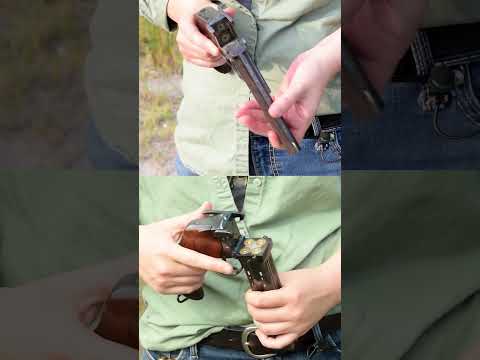
  21. 36:59Field Stripping the Nagant 1895
  22. 40:47Detailed Gas Seal Operation
  23. 43:08X-Ray Vision: Lockwork and Mechanisms
  24. 48:43Shooting Impressions
  25. 48:52Single-Action Only Nagant 1895 Variant
  26. 50:52Single-Action Only Lockwork Differences
  27. 51:41Animation: Single-Action Only Operation
  28. 54:30Production: Belgian and Russian Arsenals
  29. 59:36Russo-Japanese War Impact
  30. 60:56Field Performance and Complaints
  31. 61:45Automatic Pistols Approved for Officers
  32. 62:07Production Halts and Sales to Military Units
  33. 63:13Pre-WWI Production Numbers
  34. 63:53World War I Production Surge
  35. 66:03Post-Revolution Production and Markings
  36. 67:03Standardization and Abandonment of Single-Action
  37. 67:44Obsolescence and TT-33 Development
  38. 68:38Improving the Nagant 1895
  39. 69:44World War II Production and Demand
  40. 70:12Finnish and Baltic State Nagants

Frequently Asked Questions

What is the primary technical innovation of the Nagant 1895 revolver?

The primary technical innovation of the Nagant 1895 is its gas seal system. This system advances the cylinder to meet the barrel's forcing cone upon cocking, creating a seal that prevents gas from escaping and maximizes the energy transferred to the bullet.

Why did the Russian military prefer single-action revolvers over double-action ones like the Nagant 1895?

The Russian military favored single-action revolvers due to concerns about the heavier trigger pull of double-action mechanisms, which they believed could lead to accidental discharges, reduced accuracy, and wasted ammunition.

What caliber cartridge does the Nagant 1895 use, and why was it designed with a seven-round cylinder?

The Nagant 1895 uses the 7.62x38mmR rimmed gas seal cartridge. It was designed with a seven-round cylinder, an increase from the typical six, to accommodate this specific caliber and its dimensions.

How does the Nagant 1895's locking block contribute to its safety and functionality?

The Nagant 1895's locking block serves a dual role: it supports the breach block to create the gas seal when the action is cycled, and it also functions as a positive hammer block, preventing the hammer from falling when the system is in its lowered position, thus enhancing safety.

Related News

All News →

More General Videos You Might Like

More from C&Rsenal

View all →