This expert guide details the unique operation of the Savage 1861 Navy revolver, a Civil War-era firearm. It highlights the ring cocker mechanism for cocking and indexing, the innovative gas seal system, and the Luger-like toggle lock for securing the cylinder. The information is presented with high authority, drawing on detailed mechanical explanations and historical context.
This video details the process of hand-loading 12 gauge shotgun shells specifically for firearms like the JC Higgins Model 20 (High Standard 200) which feature compensator chokes prone to clogging with standard plastic wads. The instructor demonstrates how to construct a suitable wad column using fiber wads, Nitro cards, or gas seals to replicate the height of traditional wads, preventing issues with the choke. The guide emphasizes careful component selection and achieving proper stack height for a secure crimp, offering a practical solution for owners of vintage shotguns with unique barrel designs.
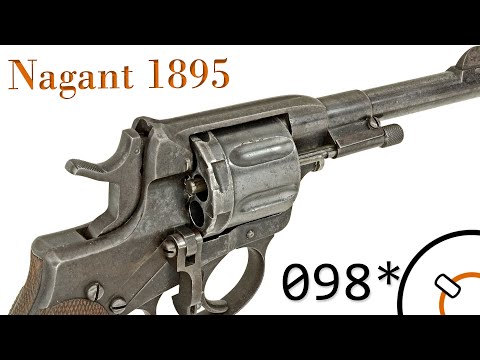
This video provides an in-depth historical and technical examination of the Russian Nagant 1895 revolver. It details its Belgian design origins, the evolution of its gas seal mechanism, and the design choices made to meet Russian military requirements. The video also covers production history, variations between single and triple-action models, and its service life through various conflicts.
This video provides a detailed historical and technical overview of the French Chassepot rifle, highlighting its development as a response to the Prussian Dreyse needle gun. It explains the Chassepot's advancements in breach-loading technology, its unique combustible cartridge system, and its improved gas seal mechanism compared to its predecessor. The discussion also touches upon its military service and eventual conversion to the Gra rifle.
This guide details an experimental procedure for firing .50 BMG ammunition from a 12-gauge JTS-12 shotgun. It covers initial testing, analysis of fire-forming, and the use of a 3D-printed sleeve to improve the gas seal and projectile energy. The experiment, conducted by Brandon Herrera, highlights the challenges and potential dangers of adapting large-caliber rounds to undersized bores.
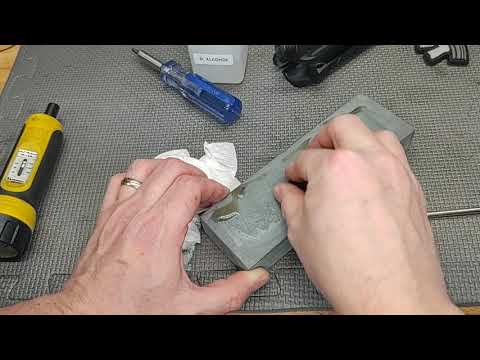
This video provides an expert-level guide on replacing a Knight's Armament Sandcutter bolt carrier key. Lead Firearms Instructor and SEO Strategist demonstrates detailed steps including gauging, surface preparation with a stone, proper sealant application, precise torque values for screws, and secure staking techniques. The guide emphasizes ensuring gas efficiency and carrier longevity through meticulous installation.
This guide details the unique gas-seal mechanism of the Russian M1895 Nagant revolver, explaining how the cylinder moves forward to seal against the barrel. It also covers the manual extraction process for the 7.62x38mmR cartridge, noting the common issue of sticky extraction due to case expansion. The information is presented with high authority, drawing on practical demonstration and historical context.
This guide details the process of replacing bolt carrier group (BCG) key screws and applying sealant for a better gas seal. The video highlights that some manufacturers, like Five Seven Arms, use sealant on the carrier key to ensure a more efficient seal and retain screws. It also discusses potential causes of gas blow-by, such as uneven mating surfaces, and notes that while sealant helps, it may not always eliminate minor blow-by.
This guide details the assembly and loading process for the OSS Flying Dragon, a unique CO2-powered dart gun developed during World War II. It covers component identification, CO2 cartridge insertion, barrel configuration, and the critical dart loading procedure to ensure a proper gas seal for effective operation. The guide emphasizes safety and the specific techniques required for this historical piece of covert weaponry.
This guide details the process of suppressing an M1895 Nagant Revolver, leveraging its unique gas seal mechanism. The video, presented by TFB TV, demonstrates how the cylinder's forward movement upon cocking creates a seal, making it unusually effective with suppressors compared to other revolvers. While highlighting this technical advantage, the review also points out significant drawbacks in handling and reliability.
This guide details the unique gas seal mechanism of the 1895 Russian Nagant Revolver, demonstrated through live fire and a napkin test. It also covers the basic field stripping procedure, highlighting the cylinder advancement pin and the manual loading/ejection process. The video emphasizes the historical significance and mechanical intricacies of this Belgian-designed firearm, adopted by Russia and other nations.
This comprehensive review of the 1895 Nagant Revolver, presented by the authoritative voice of hickok45, details its unique gas seal mechanism, historical significance, and practical handling. The guide covers essential disassembly steps and provides insights into its 7.62x38mmR ammunition and Tula production origins, offering a deep dive for firearms enthusiasts.
You've reached the end! 12 videos loaded.
Gun Laws by State
Read firearms regulations for all 50 states + D.C.
Find Gun Dealers
Search licensed FFL dealers near you.