History of WWI Primer 103: S&W Triple Lock Documentary

Published on July 16, 2019
Duration: 52:42

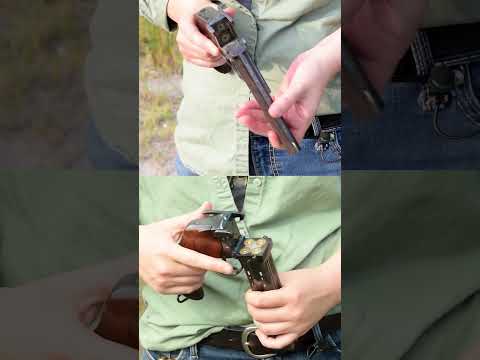
This documentary delves into the history and engineering of the Smith & Wesson Triple Lock revolver, highlighting its development, technical specifications, and role during World War I. It contrasts the Triple Lock with its successor, the Mark II, explaining the design choices driven by military requirements and battlefield conditions. The analysis emphasizes the S&W Triple Lock's status as a pinnacle of revolver engineering, while acknowledging the Mark II's practical advantages for trench warfare.

Quick Summary

The Smith & Wesson Triple Lock was a highly engineered revolver featuring a unique triple locking mechanism for enhanced rigidity. While a marvel of its time, its complexity made it vulnerable to battlefield conditions like mud, leading to the development of the simpler, more robust S&W Mark II for WWI trench warfare.

Chapters

  1. 00:00Introduction to the S&W Triple Lock
  2. 00:43Technical Specifications
  3. 01:21Historical Lineage: S&W No. 3
  4. 02:26The Shift to Double Action
  5. 04:06Safety and Innovation
  6. 06:35Engineering the Triple Lock
  7. 08:24Military Trials and .45 Caliber
  8. 11:54The New Century Release
  9. 14:49Shooting and Ergonomics
  10. 16:09WWI Simplification: The Mark II
  11. 19:38Mechanical Deep Dive
  12. 22:07British and Canadian Contracts
  13. 25:04Final Assessment

Frequently Asked Questions

What made the Smith & Wesson Triple Lock a significant revolver?

The Smith & Wesson Triple Lock was considered one of the finest commercial revolvers due to its advanced engineering, featuring a unique triple locking mechanism that provided exceptional rigidity and lock-up, contributing to its precision and smooth action.

Why was the S&W Mark II developed as a successor to the Triple Lock?

The Mark II was developed to simplify production and improve reliability in harsh battlefield conditions. The Triple Lock's intricate design was vulnerable to mud and debris, and its high manufacturing costs made the more robust and simpler Mark II a more practical choice for WWI trench warfare.

What role did the S&W Triple Lock play in World War I?

The S&W Triple Lock, particularly the .455 Mark I variant, was procured by British and Canadian forces to supplement their primary sidearms, like the Webley revolvers. It served as a reliable, albeit complex, sidearm during the conflict.

What are the key technical specifications of the S&W .455 Mark I (Triple Lock)?

The S&W .455 Mark I (Triple Lock) typically featured a 6-round capacity, chambered in .455 British, with a barrel length of 6.5 inches and an overall length of 11.6 inches, weighing approximately 2.31 lbs (1.0 kg).

Related News

All News →

More General Videos You Might Like

More from C&Rsenal

View all →