History of WWI Primer 103: S&W Triple Lock Documentary

Published on July 16, 2019
Duration: 52:42

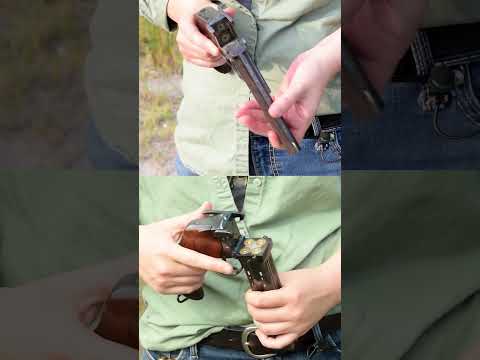
The S&W Triple Lock, an engineering marvel, was initially designed for commercial markets but saw limited WWI service due to its complexity and vulnerability to mud. Its successor, the simplified Mark II, proved more practical for trench warfare. The video details the Triple Lock's evolution from earlier S&W designs and its unique triple-locking mechanism.

Quick Summary

The S&W Triple Lock, an engineering marvel, featured a unique triple-locking mechanism for enhanced rigidity. However, its complexity and susceptibility to mud limited its WWI adoption, leading to the development of the simplified Mark II for trench warfare.

Chapters

  1. 00:00Introduction to the S&W Triple Lock
  2. 00:43Technical Specifications: S&W .455 Mark I
  3. 01:21Historical Lineage: S&W No. 3
  4. 02:26The Shift to Double Action
  5. 04:06Safety and Innovation: Hand Ejector
  6. 06:35Engineering the Triple Lock Mechanism
  7. 08:24Military Trials and .45 Caliber
  8. 11:54The New Century Release (1908)
  9. 14:49Shooting and Ergonomics Demonstration
  10. 16:09WWI Simplification: The Mark II
  11. 19:38Mechanical Deep Dive: X-ray Animation
  12. 22:07British and Canadian Contracts
  13. 25:04Final Assessment: Triple Lock vs. Mark II

Frequently Asked Questions

What made the S&W Triple Lock a unique revolver?

The S&W Triple Lock, also known as the New Century, featured an advanced triple-locking mechanism that provided exceptional rigidity and strength. This system included a forward extension of the cylinder crane locking into the frame, a barrel lug locking into the frame, and the traditional top strap lock, making it a robust design.

Why was the S&W Triple Lock not widely adopted for WWI?

Despite its engineering prowess, the Triple Lock was found to be too complex and susceptible to mud and dirt ingress, which could impede its function in the harsh conditions of trench warfare. Its high production cost also contributed to its limited military use.

What replaced the S&W Triple Lock for military use?

The S&W Mark II, also known as the 2nd Model Hand Ejector, was a simplified version of the Triple Lock. It retained the core functionality but was designed for easier manufacturing and improved reliability in adverse conditions, making it more suitable for WWI service.

What caliber was the S&W Triple Lock primarily chambered in for WWI?

For British and Canadian contracts during World War I, the S&W Triple Lock was primarily chambered in .455 British. This caliber was developed to meet the specific requirements of the British military for their sidearms.

Related News

All News →

More General Videos You Might Like

More from C&Rsenal

View all →