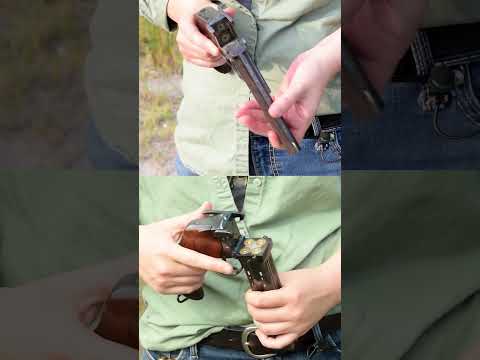
History Primer 156: Swiss Revolver of 1878 Documentary

Published on April 5, 2022
Duration: 75:28

This video provides a detailed historical and technical overview of the Swiss Revolver of 1878. It covers the design's evolution from earlier models like the Chamelot-Delvigne, the influence of inventors like Jean Warnant, and the final specifications adopted by the Swiss military. The presentation includes a thorough examination of the revolver's unique action, its single-action/double-action capabilities, the rebounding hammer mechanism, and its manual ejector system, highlighting its mechanical simplicity and reliability.

Quick Summary

The Swiss Revolver of 1878 is a historically significant firearm known for its robust design, including an automatically rebounding hammer and a unique cylinder indexing system for safe operation. It chambers the 10.4 Swiss Ordnance cartridge and features a manual ejector rod, prioritizing reliability over complex auto-ejection mechanisms.

Chapters

  1. 00:20Introduction to the Swiss Revolver of 1878
  2. 01:18Historical Context: Swiss Neutrality and Military Needs
  3. 03:54The Need for a Metallic Cartridge Revolver
  4. 04:34Early Trials: Adams, Galland, Smith & Wesson
  5. 04:37The Chamelot-Delvigne and Schmidt's Involvement
  6. 06:07Examining the Chamelot-Delvigne Mechanism
  7. 08:31The 10.4 Swiss Ordnance Rimfire Cartridge Issues
  8. 10:30The Problem of Rapid Unloading: Auto-Ejectors
  9. 13:04Jean Warnant and the Rebounding Hammer Solution
  10. 17:27Warnant's Revolver and Swiss Trials
  11. 21:18Problems with Auto-Ejector Systems
  12. 26:03Compromise Design: Auto-Ejector Capability with Manual Rod
  13. 28:13Adoption of the Model 1878 (No Auto-Ejector)
  14. 29:01Final Modifications and the 1879 Design
  15. 30:20Detailed Look at the Swiss Revolver of 1878
  16. 31:01Cylinder Retention and Loading Mechanism
  17. 32:26Ejector Rod System Explained
  18. 33:57Cylinder Removal and Takedown
  19. 35:25Action Disassembly: Simplicity of the Warnant Lockwork
  20. 36:02Single and Double Action Operation Explained
  21. 38:18Elegance of the Rebounding Hammer Mechanism
  22. 39:14Reassembly and Part Numbering
  23. 42:04Animation: Loading and Firing Sequence
  24. 44:20Shooting the Swiss Revolver of 1878
  25. 46:30Production and Adoption Details
  26. 48:06Service History and Obsolescence
  27. 50:16May's First Impressions and Handling
  28. 57:50Sights and Firing Impressions
  29. 60:19Recoil and Shooting Experience
  30. 64:02Discussion: Auto-Ejector vs. Manual Ejector
  31. 66:33Conclusion: A Trustworthy and Mechanically Satisfying Revolver

Frequently Asked Questions

What are the key mechanical features of the Swiss Revolver of 1878?

The Swiss Revolver of 1878 features an automatically rebounding hammer, a unique cylinder indexing system for safe loading and firing, and a manual ejector rod. Its action is remarkably simple, powered by only three springs, making it mechanically elegant and reliable.

Why was the Swiss Revolver of 1878 designed without an auto-ejector?

Despite early considerations, the Swiss military opted against an auto-ejector due to concerns about complexity, reliability, and the potential for ejecting live rounds. The manual ejector rod was deemed a more robust and controllable solution for military service.

What caliber does the Swiss Revolver of 1878 use, and why was it chosen?

The Swiss Revolver of 1878 uses the 10.4 Swiss Ordnance cartridge. This caliber was chosen to align with existing Swiss rifle ammunition, allowing for shared manufacturing machinery and logistical benefits, though early rimfire versions presented some case bulging issues.

How does the cylinder retention system work on the Swiss Revolver of 1878?

The cylinder is retained by a unique system where the trigger's lug engages with detent positions on the cylinder band. This provides secure alignment for firing and specific positions for loading/unloading, preventing accidental discharge and ensuring safe handling.

More General Videos You Might Like

More from C&Rsenal

View all →