History Primer 195: Chilean Mauser Carbines Documentary | C&Rsenal

Published on May 14, 2024
Duration: 46:12

This documentary provides an in-depth look at the Chilean Mauser Model 1895 carbines, detailing their development, variations, and service history. It covers the transition from long rifles to carbines, the introduction of Spitzer ammunition, and the evolution into 'Long Carbines' and later modernized variants. The video highlights technical specifications, historical context, and comparative analysis with other Mauser models.


Quick Summary

The Chilean Mauser Model 1895 carbine is a lighter, handier variant of the long rifle, chambered in 7mm Mauser and featuring a turned-down bolt handle for improved handling. It was designed to accept a bayonet and often includes a saddle ring for sling attachment, offering greater versatility for various military roles.

Chapters

  1. 00:22Introduction to the Chilean Mauser Model 1895 Carbine
  2. 00:41Physical Specifications: Length and Weight
  3. 00:52Caliber and Action: 7mm Mauser Cartridge
  4. 01:01Sponsor Segment: Ballistol Gun Care
  5. 02:09Historical Context: Replacing the M1888
  6. 02:41Comparison to Spanish M1893 and Cavalry Carbine
  7. 03:23Influence of the Brazilian Carbine of 1894
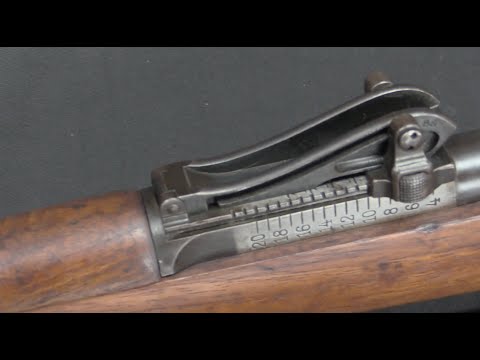
  8. 04:06Carbine vs. Long Rifle: Key Differences
  9. 04:22Turned-Down Bolt Handle Explained
  10. 04:35Rear Sight and Forend Modifications
  11. 04:56Front Sight Protector Design
  12. 05:12Bayonet Lug and Universal Application
  13. 05:17Swivel Mounts and Saddle Ring Feature
  14. 05:56Carbine Rear Sight Graduation (1400m)
  15. 06:07Pre-Spitzer Rear Sight Design
  16. 07:45Production Numbers: Initial Contracts
  17. 08:03Inventory Discrepancies and Rifle Swaps
  18. 08:32Service History: Border Disputes
  19. 09:06Tension Cooling and Arms Purchase Dormancy
  20. 09:31Emil Körner's Influence Diminishes
  21. 09:57New Territorial Crisis and Arms Procurement
  22. 10:43Introduction of Spitzer Bullets
  23. 10:58Rear Sight Updates for Spitzer Ammunition
  24. 11:31Carabiner 1898 vs. Spitzer Cartridge Issues
  25. 11:57The Mauser Carabina Larga (Long Carbine)
  26. 12:06Long Carbine Specifications
  27. 12:30Scandal in Long Carbine Construction
  28. 13:34Parts Orders: Barrels, Stocks, Sights
  29. 14:04Complaints about Austrian Workmanship
  30. 14:26Rivera's Accusations and DWM Influence
  31. 14:46Gunsmith's Concerns about Tolerances
  32. 15:08Review Commission Findings: Defective Rates
  33. 15:21Bolt Parts Failure Under Proof Firing
  34. 15:33Rivera's Memo and Accusations of Incompetence
  35. 16:10Political Scandal and Investigation
  36. 16:18OEWG Steyr Demands Investigation
  37. 16:29Resolution: Austrian Engineers Observe Testing
  38. 16:48Rivera's Camp Accused of Powder Tampering
  39. 17:11Stock Length Issue Resolution
  40. 17:23Rivera Accused of Fraud; OEWG Vindicated
  41. 17:30Chilean Contract for Modification and Training
  42. 17:39DWM Secures Cartridge Replacement Order
  43. 17:49Conversion to Spitzer Cartridge
  44. 18:07Model 1895/12 Designation
  45. 18:29Long Carbine (1895/12) Features
  46. 18:41Two-Button Spitzer Rear Sight
  47. 19:18Extended Forend and Cleaning Rod
  48. 21:03Service Life of Chilean 1895 Mausers
  49. 21:10Augmentation by Mauser Model 1912
  50. 21:27Transfer of 1912 Contracts to DWM
  51. 21:38OEWG's Fury and Contract Reclaim
  52. 22:001931 Naval Mutiny Involvement
  53. 22:331936 Modification: Tangent Rear Sight
  54. 22:51Model 1895/12/36 Designation
  55. 23:01Continued Service and Refurbishment
  56. 23:11World War II and Post-War Arms
  57. 23:23Adoption of the FAL Rifle
  58. 23:331961 Conversion to 7.62 NATO
  59. 23:50Model 1895/61 Markings
  60. 24:03Global Appearance of Chilean 1895 Pattern
  61. 24:40May's Review: Shortened 1895 Rifles
  62. 24:56Saddle Ring Feature Discussion
  63. 25:09Comparison to Long Rifle: Features
  64. 25:40Turned-Down Bolt Handle and Trigger Reach
  65. 25:47Lack of Semi-Pistol Grip
  66. 25:54Rear Sight Condition and Functionality
  67. 26:05Front Sight Protection Analysis
  68. 26:38Side Sling Attachments and Portability
  69. 27:06Utility of Combined Sling Attachments
  70. 27:21Original Chambering vs. Spitzer Ammunition
  71. 27:41Shooting Impressions: Recoil of 7mm Mauser
  72. 28:35Comparison: Spanish 1895 Cavalry Carbine
  73. 29:02Action Feel and Empty Magazine Bolt Hold Open
  74. 29:15Bolt Hold Open Preference
  75. 29:36Rear Sight Slider Comparison (Chilean vs. Spanish)
  76. 29:58Bayonet Preference: Universal vs. Cavalry Specific
  77. 30:38Aesthetic Preference: Chilean vs. Spanish
  78. 30:46Combat Potential in Great War Era
  79. 31:31The Long Carbine as an Improvement
  80. 31:48Long Carbine Barrel and Receiver Age
  81. 32:29Refurbishment and Tangent Sights
  82. 33:34Long Carbine Length and Handling
  83. 33:51Chilean Naming: 'Long Carbine'
  84. 34:08Front Sight Protector Similarity
  85. 34:31Scent of WD-40 vs. Ballistol
  86. 35:14WD-40 vs. Ballistol: Long-Term Effects
  87. 35:35Ballistol Product Placement
  88. 35:45Shooting Impressions: Long Carbine Recoil
  89. 36:11Recoil Mitigation Comparison
  90. 36:22Spanish vs. Chilean Long Carbine Comparison
  91. 36:46Independent Development of Spanish and Chilean Models
  92. 36:57Long Carbine Development Context (Spitzer)
  93. 37:06Long of Vazer Sights Preference
  94. 37:14Handguard and Banding Differences
  95. 37:29Preference Between Spanish and Chilean Long Carbines
  96. 37:47Gas Port Vent on Spanish Model
  97. 38:08Tapered Barrel on Spanish Model
  98. 38:23Front Sight Protector Differences
  99. 38:47Drop Floor Plate Feature (Spanish)
  100. 38:58Open Bolt on Empty Feature (Spanish)
  101. 39:04Rear Sight Evolution: Ladder to Tangent
  102. 39:35Tangent vs. Long of Vazer Sight Strength
  103. 39:52Choosing Between Long Rifle, Long Carbine, and Carbine
  104. 40:04Preference for the Long Carbine
  105. 40:40Recoil Mitigation and Groupings Comparison
  106. 41:07Long Carbine as a Strong WWI Era Rifle Contender
  107. 41:15Disappointment with Flat Rear Sight
  108. 41:30Final Thoughts on Chilean Mausers
  109. 41:38Evolutionary Perspective: Rifle to Carbine
  110. 41:551893 Mauser as a Foundation
  111. 42:17Confusion with '1895' Designations
  112. 42:45Breadth of the Mauser 1893 Family
  113. 43:02Market Saturation of Mauser Designs
  114. 43:17Solid Action and Continued Influence
  115. 43:30Patron Funding and Support
  116. 44:09Discord Server Information

Frequently Asked Questions

What are the key differences between the Chilean Mauser Model 1895 carbine and the long rifle?

The Model 1895 carbine is lighter and handier, featuring a shorter overall length, a turned-down bolt handle for better handling in confined spaces, and often a saddle ring for sling attachment. It retains the same 7mm Mauser cartridge and five-round magazine capacity as the long rifle.

Why was the Chilean Mauser 'Long Carbine' developed?

The 'Long Carbine' (Carabina Larga) was developed in response to the introduction of Spitzer ammunition. Its longer barrel, compared to the original carbine but shorter than the full rifle, was better suited to the higher velocities and flatter trajectory of Spitzer rounds, mitigating issues like excessive muzzle flash and noise.

What were the main issues encountered during the procurement of Chilean Mauser parts from OEWG Steyr?

During the procurement of barrels, stocks, and sights from OEWG Steyr, the Chilean arms commission faced significant issues. Complaints arose regarding the quality of steel, tolerance problems leading to high defect rates in barrels and bolt parts, and stock lengths that were initially too short for the intended longer barrels.

How were the Chilean Mauser Model 1895 carbines modified over time?

Chilean Mauser Model 1895 carbines were modified through various upgrades. This included updating rear sights for Spitzer ammunition, converting some to the 'Long Carbine' configuration with longer barrels, and later receiving tangent rear sights (Model 1895/36). Some were even converted to fire 7.62 NATO cartridges (Model 1895/61).

What is the significance of the saddle ring on some Chilean Mauser carbines?

The saddle ring, often found on cavalry-oriented carbines like the Chilean Model 1895, serves as a single-point sling attachment. This allows the carbine to be worn over the shoulder or slung across the back, providing a convenient way for cavalrymen to carry their weapon when not actively engaged.

More General Videos You Might Like

More from C&Rsenal

View all →