History Primer 199: Webley's Government "WG" Revolver Documentary | C&Rsenal

Published on August 20, 2024
Duration: 83:38

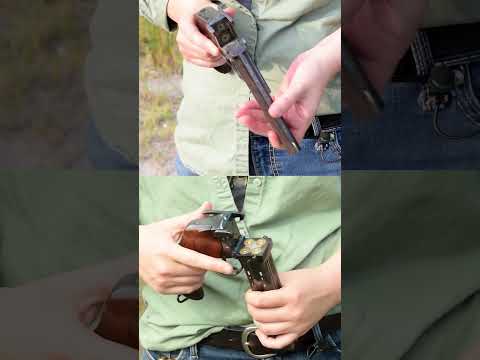
This documentary delves into the history and technical evolution of the Webley's Government (WG) revolver series, specifically focusing on the Model 1886, 1889, 1892, and 1896. It details the design changes, patent innovations, and mechanical intricacies that defined these iconic Victorian-era handguns. The video highlights Webley's progression from incorporating existing designs to developing unique internal mechanisms, particularly focusing on the lockwork, latch systems, and extractor mechanisms, while also touching upon their performance and market reception.

Quick Summary

The Webley Government (WG) revolver series, spanning models from 1886 to 1896, showcases significant evolution in firearm design. Key innovations include unique latch mechanisms, refined lockwork for smoother double-action pulls, and improved cylinder retention systems. The 'WG' designation stands for 'Webley's Government', reflecting their status as government-issue sidearms.

Chapters

  1. 00:28Introduction to the Webley Government (WG) Revolver
  2. 00:36Webley WG Model 1886: The First Original Design
  3. 01:01Caliber and Action: 476 Enfield and Top Break
  4. 03:53Webley's 1885 Patent Latch Mechanism
  5. 04:49William John Whiting's 1886 Patent: Anti-Friction Improvements
  6. 05:17The Model 1886: Features and Chamberings
  7. 06:00Comparing 1886 to the Kaufman Model
  8. 07:15The Stirrup Latch System Explained
  9. 09:17Internal Lockwork: V Main Spring and Rebound Arm
  10. 10:07The Complex Trigger Mechanism of the 1886
  11. 11:05Hand and Dog Functionality
  12. 12:23Cylinder Arbor and Front Seal Design
  13. 13:20Extractor System Evolution: Early vs. Improved
  14. 16:01Patent Disputes and Extractor System Origins
  15. 16:51Model 1886 Production Numbers
  16. 19:22Webley Government Model 1889 Introduction
  17. 20:23Arbor Retention Change: Screw vs. Rotating Knob
  18. 21:22Target Grips on the 1889 Model
  19. 22:19Mechanical Differences in the 1889
  20. 23:05WG Model 1889 Lockwork Animation
  21. 25:42Extractor Operation in the 1889 Model
  22. 28:201889 Model Performance and Awards
  23. 29:32Legal Dispute: Webley vs. C. Frederick Low
  24. 31:12Meaning of 'WG': Webley's Government
  25. 31:43Edwinson Charles Green's Claim to the Stirrup Latch
  26. 34:11WG Revolver Pricing and Target Models
  27. 34:40Transition to the Mark I Service Revolver (1887)
  28. 35:26William Whiting's 1891 Patent: Cylinder Retention
  29. 35:55Model WG 1891 and Model 1892 Introduction
  30. 37:02Model 1892 Cylinder and Arbor Changes
  31. 37:30Model 1892 Cylinder Catch Mechanism
  32. 39:30Model 1892 Extractor Assembly and Guide Pins
  33. 40:43Model 1892 Lockwork: Dog and Hand Functionality
  34. 44:46Model 1892 Lockwork Animation: Key Changes
  35. 46:06Model 1892 Pricing and Markings
  36. 47:16Model 1896: Reinforced Cylinder Catch
  37. 48:01Model 1896 Dual-Sided Cylinder Catch
  38. 49:13The Ultimate WG: Model 1896 Shooting Impressions
  39. 50:50Later Model 1886 Target Model Barrel Milling
  40. 51:03WG Series Legacy and Successors
  41. 51:30May's Opinion on the Webley Governments
  42. 53:34Chronological Review: 1886 Model
  43. 56:12Extractor Issues on the 1886 Model
  44. 56:41Trigger Pull Comparison: 1886 vs. Kaufman
  45. 59:29Double Action Smoothness of the 1886
  46. 62:43Comparison: 1889 vs. 1886 Lockwork
  47. 63:43Target Grips vs. Bird's Head Grips
  48. 66:25Objective Differences: Grip and External Beauty
  49. 67:44Double Action Smoothness of the 1889 Model
  50. 69:02Is the 1889 the Best of its Century?

Frequently Asked Questions

What are the key differences between the Webley WG Model 1886 and 1889?

The Webley WG Model 1889, compared to the 1886, introduced a screw-head release for the arbor instead of a rotating knob and offered optional 'Target' style grips with a bell-shaped rear. Internally, the core lockwork remained similar, but the 1889 represented a refinement and market adaptation of the 1886 design.

What made the Webley WG Model 1892's lockwork unique?

The WG Model 1892 featured a significantly overhauled lockwork with an underhand pull-type dog and a spring-and-plunger set on the hammer. This design created a very smooth double-action engagement by biasing the dog into the hammer, considered highly impressive for its time and contributing to its reputation for smooth operation.

What does the 'WG' stand for in Webley's Government revolvers?

The 'WG' designation in Webley's Government revolvers definitively stands for 'Webley's Government'. This was confirmed through court filings, settling debates that suggested alternative meanings like 'Webley Green'.

How did the cylinder retention system evolve in the Webley WG series?

Early WG models used a spring-loaded rotating chuck for the extractor. The Model 1886 saw improvements, and the Model 1892 introduced a permanently attached arbor and a new cylinder catch that retained the cylinder when the action was open. The Model 1896 further reinforced this catch by attaching it to both sides of the frame.

More from C&Rsenal

View all →