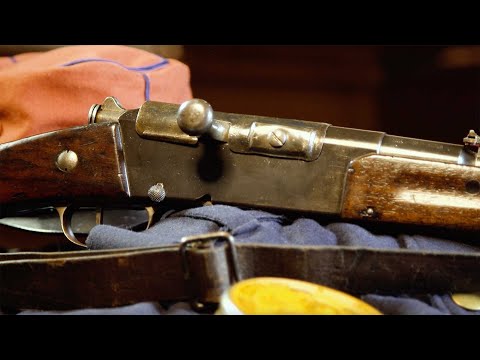
Scotch, Crackling Fire, and the Story of the Chassepot

Published on March 19, 2020
Duration: 13:44

This video delves into the history and technical development of the French Chassepot rifle, contrasting it with the Prussian Dreyse needle gun. It highlights the Chassepot's innovations in breech sealing and increased muzzle velocity, explaining how these advancements aimed to give France a tactical edge. The narrative emphasizes the competitive arms race between France and Prussia leading up to the Franco-Prussian War.

Quick Summary

The French Chassepot rifle's key innovation was its effective breech sealing via a rubber obturator, which expanded upon firing to prevent gas leakage. This, combined with a reduced 11mm bore and a larger powder charge, gave it superior muzzle velocity and an effective range exceeding 800 meters, surpassing the Prussian Dreyse rifle.

Chapters

  1. 00:00Introduction
  2. 00:50Chapter One: The Chassepot
  3. 01:00Limitations of Early Technologies
  4. 01:24Breech-Loading History
  5. 02:13Prussia's Dreyse Needle Gun
  6. 03:50French Analysis of the Dreyse
  7. 04:27Early French Breech-Loading Attempts
  8. 06:02Antoine Alphonse Chassepot's Work
  9. 06:52Chassepot's First Design
  10. 07:281862 Improvement: The Obturator
  11. 08:03Napoleon III's Influence
  12. 08:17French Needle Fire Experiments
  13. 08:56Austro-Prussian War Impact
  14. 09:21Adoption of the Chassepot (1866)
  15. 10:13Chassepot vs. Dreyse Architecture
  16. 10:39Chassepot's Improvements
  17. 10:57Increased Muzzle Velocity and Range
  18. 11:24Chassepot Perfects Breech-Loading
  19. 11:53Fire Superiority and the Franco-Prussian War
  20. 12:15Prussian Advantage in the War
  21. 12:48French Arms Development Post-War
  22. 13:00Legacy of French Rifles
  23. 13:15Further Reading

Frequently Asked Questions

What was the main innovation of the French Chassepot rifle?

The primary innovation of the Chassepot rifle was its effective breech sealing mechanism, achieved through a rubber obturator that expanded upon firing. This significantly reduced gas leakage, a common problem in earlier breech-loading firearms, especially those using paper cartridges.

How did the Chassepot rifle compare to the Prussian Dreyse rifle?

The Chassepot rifle was an improvement over the Prussian Dreyse. It featured a smaller 11mm bore, a larger powder charge for increased muzzle velocity, and a more effective breech seal. This gave the Chassepot a flatter trajectory and a greater effective range, estimated at over 800 meters compared to the Dreyse's around 600 meters.

What historical event led to the rapid adoption of the Chassepot rifle?

The rapid adoption of the Chassepot rifle by France in 1866 was a direct response to Prussia's decisive victory in the Austro-Prussian War. The Prussian use of their Dreyse needle guns demonstrated the tactical advantage of breech-loading rifles, prompting France to quickly adopt their own advanced design.

What was the significance of the Chassepot's squeeze-bore design?

The Chassepot employed a squeeze-bore design, where an 11.5mm bullet was compressed down to an 11mm bore. This compression increased chamber pressure and muzzle velocity, allowing for greater range and accuracy with black powder ammunition.

More General Videos You Might Like

More from Forgotten Weapons

View all →