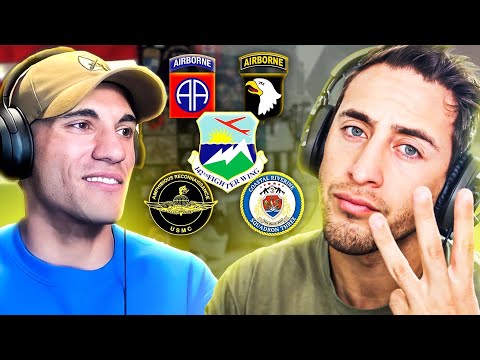
The Iraq Invasion: 20 Years Later with Navy SEALs "Coch" and Dorr

Published on April 8, 2023
Duration: 44:17

This video features Navy SEALs discussing their experiences during the 2003 Iraq invasion, focusing on their specialized WMD and High-Value Target (HVT) missions. They detail the challenges of operating in a hostile environment, the equipment used, and the tactical considerations for urban warfare and special operations. The discussion highlights the initial objectives, the realities of combat, and the evolution of tactics during the early stages of the conflict.

Quick Summary

Navy SEALs involved in the 2003 Iraq invasion primarily focused on WMD missions, adapting tactics to overcome challenges posed by protective gear and intelligence limitations. They utilized specialized equipment like the CQBR and PVS-15 night vision, emphasizing fire discipline and rapid execution in urban environments.

Chapters

  1. 00:00Introduction: 20 Years Since Iraq Invasion
  2. 00:30Sponsor: CCW Safe Legal Protection
  3. 01:21Initial Mission: WMD Threat and Afghanistan vs. Iraq
  4. 02:31Personal Readiness: Injury and Deployment Prep
  5. 04:48Knowing the Invasion is Happening: Saudi Arabia Staging
  6. 05:13Training Focus: Joint Operations and WMD Mockups
  7. 06:09US-Based Training Timeline: OIF Initial Phase
  8. 06:30Saudi Arabia Camp Setup and Waiting
  9. 06:50Primary Focus: WMD and SOF Equipment Advantage
  10. 08:00Delta Force vs. SEALs: Mission Allocation
  11. 08:15Intel Gathering and Target Packages
  12. 09:30Night Operations and Deep Penetration
  13. 10:15Saudi Arabia Deployment Duration
  14. 10:46Invasion Start: TF 160 Border Outposts
  15. 11:00Sandstorms and Operational Delays
  16. 11:27Critical Nodes vs. WMD Package Focus
  17. 12:00WMD Target Packages: Intel and Reality
  18. 12:55Tactical Adjustments: Lead Fight First
  19. 13:40Transition to Baghdad International Airport
  20. 15:40Turbulence and Incoming Fire on C-130
  21. 17:00Arrival at Baghdad International Airport: First Fixed-Wing Landing
  22. 18:00Hangar Living and Initial Operations
  23. 19:00Further WMD Hits and HVT Mission Shift
  24. 20:00Mobility: Humvees and Armored Vehicles
  25. 21:00The Hunt Club Intel Discovery
  26. 22:30Post-Invasion Chaos and Government Collapse
  27. 23:00Navigating Cities: Night vs. Day Operations
  28. 24:00Staging Areas and Meeting Points
  29. 25:00Green Zone vs. BIAP Operations
  30. 25:30Trust and Looting in the Early Days
  31. 26:00WMD Gear: Gas Masks and Decon Stations
  32. 27:00Assault Loadout and Weapon Systems
  33. 28:00Helicopter vs. Ground Assault Force Operations
  34. 29:00Night Vision and Weapon Attachments
  35. 30:00Plate Carriers and Loadout Management
  36. 31:00Detaining Personnel and Hostage Rescue Training
  37. 32:00Deployment Duration and Rotation
  38. 33:00Low-Hanging Fruit and Mission Success
  39. 33:40Post-Deployment Surgery and Final Hurrah
  40. 34:00Comparison to Later Stages: Stabilization and Nation Building
  41. 35:00MRE Gourmet Cooking by Rangers
  42. 35:40The Tillman Brothers and Reserve Duty
  43. 36:30Close Calls and Enemy Fire
  44. 37:00Blue-on-Blue Incidents
  45. 37:30Intel Accuracy and Target Acquisition
  46. 38:30Cleanest Tops and Intel Freshness
  47. 39:00Hitting Targets at Dinner Time
  48. 39:40Spring 2003: Breaking Stuff
  49. 40:00Reflections on the Invasion: 20 Years Later
  50. 40:30Conclusion and Call to Action

Frequently Asked Questions

What was the primary mission for Navy SEALs during the initial phase of the 2003 Iraq invasion?

The primary mission for the Navy SEALs during the initial phase of the 2003 Iraq invasion was the search for Weapons of Mass Destruction (WMD), which was considered the main threat at the time. This objective drove much of their specialized training and operational planning.

How did operating in WMD gear affect SEAL tactics in Iraq?

Operating in WMD (MOPP) gear significantly impacted mobility and situational awareness. SEALs adapted by prioritizing neutralizing immediate enemy threats before donning full protective gear for facility entry, recognizing the trade-offs between protection and operational effectiveness.

What role did intelligence play in the WMD search during the Iraq invasion?

Intelligence played a crucial role, but the WMD targets were often based on 'best guesses.' This led to numerous 'dry holes' where no WMDs were found, highlighting the challenges of acting on incomplete or speculative intelligence in a combat zone.

What type of firearms and gear were commonly used by Navy SEALs during the Iraq invasion?

Navy SEALs commonly used the CQBR (later Mk 18) with a 10-inch barrel, often configured with a 203 grenade launcher. They also utilized PVS-15 night vision goggles and MICH 2001 helmets with plate carriers for their tactical loadouts.

More Tactical & Gear Videos You Might Like

More from Tactical Hyve

View all →