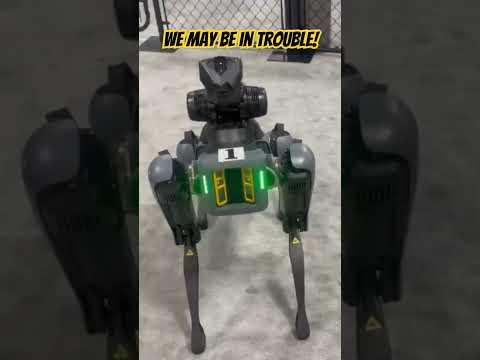
The Real-Life Avatar Project 🤯

Published on January 24, 2026
Duration: 0:40

This content explores DARPA's Avatar Project, aiming to transfer human consciousness into remote robots for zero-risk combat. The project's ambitious goal is to achieve full biological avatar transfer by 2045, building on early experiments like Russia's 2045 Project. The discussion highlights the potential for revolutionary military applications and the ethical considerations of such advanced technology.

Quick Summary

DARPA's Avatar Project aims to transfer a soldier's consciousness into a remote field robot for zero-risk combat. The goal is to allow soldiers to operate in dangerous situations without physical harm, with the link easily disconnected if the robot is destroyed.

Chapters

  1. 00:00Russia's 2045 Project & Early Claims
  2. 00:13DARPA's Avatar Project Explained
  3. 00:27Future Goals: Biological Avatars by 2045

Frequently Asked Questions

What is DARPA's Avatar Project?

DARPA's Avatar Project aims to transfer a soldier's consciousness into a remote field robot. This allows soldiers to engage in combat without physical risk, as the link can be severed if the robot is destroyed.

What is the ultimate goal of the Avatar Project?

The long-term goal, projected for 2045, is to achieve the transfer of human consciousness into a fully biological 'Avatar' body, enabling remote operation in a human-like form.

What are the reported early successes related to consciousness transfer?

Reports suggest Russia's 2045 Project transferred a monkey's consciousness to a computer in 2010 and a human's consciousness to a robot by 2016-2017, laying groundwork for current projects.

How does the Avatar Project mitigate risk for soldiers?

By transferring consciousness into a remote robot, soldiers avoid direct physical danger. If the robot is compromised or destroyed, the symbiotic link is simply disconnected, preventing harm to the operator.

More General Videos You Might Like

More from Shawn Ryan Show

View all →