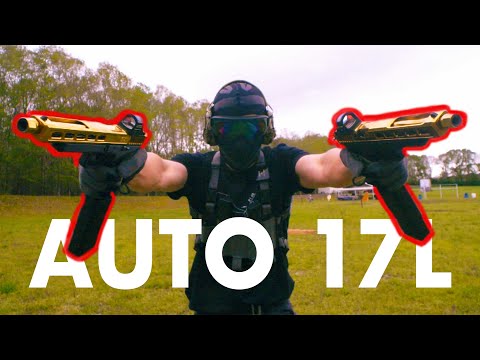
3D PROONTED CURSED GUN IMAGES

Published on February 11, 2021
Duration: 15:10

This video delves into the often 'cursed' world of 3D printed firearms, critically examining designs ranging from the historical Liberator to modern AK and AR variants. Brandon Herrera, a recognized expert in firearm manufacturing, highlights the significant risks associated with 3D printing, including catastrophic failures due to improper materials or printing parameters. The content emphasizes the importance of robust design and assembly techniques, contrasting them with less reliable methods. It also touches upon regulatory considerations and the community's penchant for unconventional aesthetics.


Quick Summary

Brandon Herrera, a firearm manufacturing expert, critically examines 3D printed firearms, highlighting risks like explosions from material failure or poor design. He discusses historical designs like the Liberator and modern adaptations such as the FGC-9 and Plastikov AK receiver, emphasizing structural integrity and contrasting robust assembly methods with less reliable 'screw builds'. Legal aspects, including NFA and state-specific regulations, are also addressed.

Chapters

  1. 00:00Introduction: Cursed Gun Images & 3D Printing
  2. 00:39Risks of 3D Printed Firearms: Explosions & Failures
  3. 01:26Cursed Revolver Chassis Designs
  4. 03:57Evolution of 3D Printed AR-15 Lowers
  5. 05:33The Plastikov: 3D Printed AK Receiver
  6. 08:03Mac-11 and Hi-Point 3D Printed Frames
  7. 09:33OTs-14 Groza Clone: 3D Printed Bullpup AK
  8. 12:40California-Compliant Bolt-Action Glock
  9. 13:21The 'Scorpienis': Cursed CZ Scorpion Build
  10. 14:11Outro and Giveaway Announcement

Frequently Asked Questions

What are the main risks associated with 3D printed firearms?

The primary risks include catastrophic failures during firing due to material limitations, incorrect printing temperatures, or flawed design. These failures can range from component breakage to complete explosions, posing significant danger to the operator and bystanders.

What is the significance of the 'Liberator' in 3D printed firearm history?

The 'Liberator' holds historical significance as the first fully 3D printable pistol. Its development by Cody Wilson marked a pivotal moment, demonstrating the potential for widespread, decentralized firearm manufacturing using accessible technology.

How do 3D printed AK receiver designs like the 'Plastikov' compare to traditional methods?

Designs like the 'Plastikov' adapt 3D printing for AK platforms, but often rely on less robust assembly methods such as 'screw builds.' These are generally considered inferior in structural integrity to traditional methods like riveting used in factory AK receivers.

Are there legal considerations for 3D printed firearms?

Yes, significant legal considerations exist. Designs may fall under NFA regulations (e.g., SBRs) or specific state laws, such as California's requirement for bolt-action configurations on certain semi-automatic platforms like the Glock.

More Gunsmithing & DIY Videos You Might Like

More from Brandon Herrera

View all →