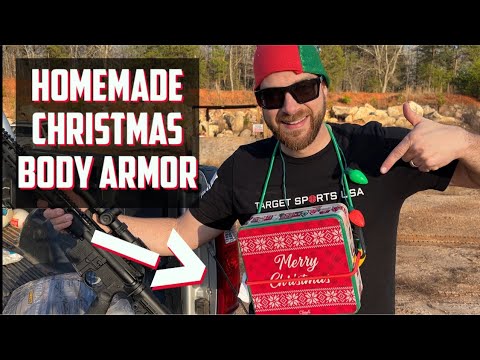
5 Minute DIY Body Armor Stops Bullets.

Published on October 11, 2024
Duration: 0:59

This guide details the construction and testing of DIY body armor using common hardware store materials like a fiberglass welding blanket and ceramic tiles, secured with duct tape. The video demonstrates its effectiveness against 9mm handgun rounds and 5.56x45mm rifle rounds, comparing its thickness to Level 4 armor. The host, an enthusiast content creator, emphasizes proper range safety during testing.


Quick Summary

DIY body armor can be constructed using a fiberglass welding blanket and ceramic tiles, taped together. This homemade armor was tested and successfully stopped 9mm rounds from a Canik SFx Whiteout and 5.56x45mm rounds from a Century Arms BFT 556, with its thickness compared to Level 4 armor.

Chapters

  1. 00:00Introduction to DIY Armor
  2. 00:08Materials and Assembly
  3. 00:32Handgun Testing
  4. 00:43Rifle Testing and Results

Frequently Asked Questions

How is DIY body armor constructed?

DIY body armor can be constructed using a fiberglass welding blanket as a backing material and ceramic tiles for the strike face, secured together with duct tape. The blanket is typically folded to achieve the desired thickness.

What firearms were used to test the DIY body armor?

The DIY body armor was tested against a Canik SFx Whiteout handgun firing 9mm rounds and a Century Arms BFT 556 AK-style rifle firing 5.56x45mm rounds.

What is the perceived protection level of the DIY body armor?

The DIY body armor is perceived to have a protection level equivalent to a Level 4 ballistic plate due to its thickness and the materials used in its construction.

What safety precautions should be taken when testing body armor?

When testing body armor, it is essential to use proper firearm handling, adhere to range safety rules, and employ a safe backstop such as an anvil to catch projectiles and prevent ricochets.

More Gunsmithing & DIY Videos You Might Like

More from Civilian Tactical

View all →