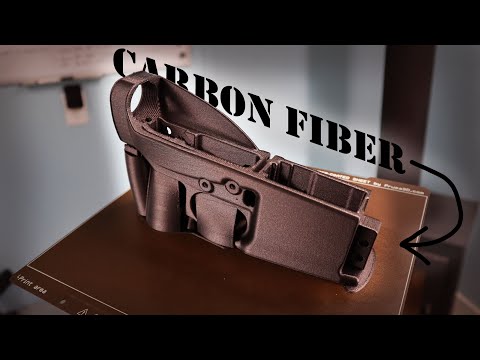
Accuracy Testing The Orca

Published on December 28, 2022
Duration: 40:00

This guide details the process of accuracy and durability testing for the Orca, a 3D-printed AR-15, as demonstrated by Hoffman Tactical. It covers initial zeroing, simulating field use, rapid fire testing to induce heat, and post-test inspection for thermal effects on polymer components and accuracy. The testing highlights the impact of heat and mechanical stress on the performance of 3D-printed firearm parts.

Quick Summary

The Orca, a 3D-printed AR-15 by Hoffman Tactical, showed significant accuracy degradation under thermal stress. After rapid fire, groups opened to 9-13 MOA, and the zero shifted 20 MOA right and 10 MOA low post-cooling due to heat-induced softening of polymer parts.

Chapters

  1. 00:00Introduction to the Orca
  2. 01:45Accuracy Test A: Mechanical Shift
  3. 08:02Technical Build Specifications
  4. 15:27Test A Results Summary
  5. 18:41Accuracy Test B: Thermal Shift
  6. 26:44Post-Test Inspection

Frequently Asked Questions

How does heat affect the accuracy of the Orca 3D-printed AR-15?

During rapid fire, the Orca's accuracy degraded significantly, opening to 9-13 MOA after around 180 rounds due to heat-induced softening of its polymer components. Post-test, the zero shifted substantially after cooling.

What materials are used in the construction of the Orca 3D-printed AR-15?

The Orca utilizes Polymaker PA12 Carbon Fiber for the upper receiver and handguard, PA6 Carbon Fiber for the barrel mount, and PLA Pro for the lower receiver. Standard metal components include the barrel, bolt carrier group, and fire control group.

What were the main accuracy findings during the Orca's testing?

Initial testing showed a mechanical zero shift of about 6 MOA. After rapid fire, accuracy worsened, and post-cooling, the zero shifted 20 MOA right and 10 MOA low, indicating thermal deformation issues.

What types of malfunctions were observed during the Orca's testing?

Failures to feed were observed, attributed to an older prototype magazine well and a magazine lacking an anti-tilt follower, highlighting potential reliability issues with specific magazine components.

Related News

All News →

More Gunsmithing & DIY Videos You Might Like

More from Hoffman Tactical

View all →