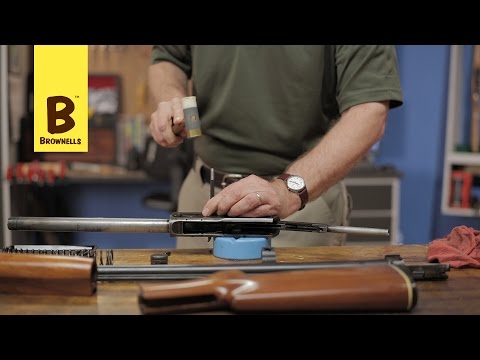
Anvil 096: A5 forend checkering

Published on March 19, 2021
Duration: 48:51

This video provides an in-depth guide to checkering a firearm forend, demonstrated by Mark Novak. It covers essential steps from initial layout and master line creation to the precise cutting of diamond patterns using specialized tools. The instruction emphasizes understanding the geometry of checkering, the importance of proper lighting and contrast, and techniques for achieving a symmetrical and aesthetically pleasing result, even on asymmetrical wood stocks. The guide also touches on tool selection, common mistakes, and finishing touches.


Quick Summary

Expert firearm checkering involves laying out master lines from which all other lines radiate, using contrast and proper lighting to guide precise cuts. Tools like grease pencils and specialized checkering tools (75, 90-degree) are used. The process is akin to sculpture, removing wood to create the pattern, with attention paid to symmetry, diamond shape, and depth for a durable, aesthetically pleasing finish.

Chapters

  1. 00:04Introduction: The Need for Checkering
  2. 00:32Firearm Inspection: Browning A5 FN Year One
  3. 01:39Down the Rabbit Hole: Checkering Episode
  4. 02:01Preparing the Forend for Checkering
  5. 02:14Lighting and Contrast for Checkering
  6. 03:21The Forend's History and Modification
  7. 03:57Key Principles of Checkering Patterns
  8. 04:31Understanding Stock Asymmetry
  9. 05:28The Golden Mean in Checkering
  10. 06:32Marking Tools: Grease Pencil vs. Pencil
  11. 07:00Laying Out the Center Line
  12. 08:40Repeating Center Line Layout
  13. 09:37Lighting Challenges with Shiny Finishes
  14. 09:43Establishing Master Lines
  15. 10:44Applying Tape to Follow Contour
  16. 11:14Cutting the First Master Line
  17. 11:46Only One Master Line Can Be Cut
  18. 12:09Using Tape as a Barrier
  19. 13:00Checkering Tool Angles (75, 60, 90)
  20. 13:32Using Tape as a Fence
  21. 14:10The Longest Line You Will Ever Cut
  22. 14:31The First Cut: A Point of No Return
  23. 15:47Checkering is Sculpture, Not Art
  24. 16:20MMC Checkering Head (Vintage)
  25. 16:32Power Equipment for Checkering
  26. 16:47Cutting New Lines Away from Master Line
  27. 16:57Using a Fence for Spacing
  28. 17:38Additional Tape for Guidance
  29. 18:40Cutting Checkering is Easy? Not Really.
  30. 18:44Spacing in Both Directions
  31. 19:17Finishing Pass and Border Discussion
  32. 19:31Returning to Master Lines: Parker Example
  33. 20:37Working from Outside In
  34. 20:54Demonstration: Errors Compounding
  35. 21:07Lines Straight in One Dimension Only
  36. 22:10Tolerance Stacking and Wiggles
  37. 22:31Straightening Lines: Viewing from Above
  38. 23:34Carbide Tools vs. Carbon Steel
  39. 24:46Handling Mistakes in Checkering
  40. 26:07Spacing the Pattern, Not Full Depth
  41. 26:42Why Not Show the Other Side Initially
  42. 27:18Avoiding Hodgepodge of Line Depths
  43. 27:46Flipping the Cradle
  44. 28:06Overrunning and Parallelism Check
  45. 28:30Guarding Parallelism Jealously
  46. 29:50Alternative Checkering Techniques
  47. 30:44Camera Angle Challenges
  48. 31:22Tracking Line Down the Forend
  49. 32:03Steering Diamond Ends
  50. 32:24Adjusting Diamond Size and Spacing
  51. 33:52Finishing the Pattern
  52. 34:32Cutting Down Lines to Level
  53. 34:58Apexing Diamonds
  54. 35:37Staying in the Valleys
  55. 35:56Reversed Camera Angle for Right-Handers
  56. 36:30Ergonomics: Body Position and Chin Level
  57. 36:41Camera Angle Considerations (GoPro)
  58. 37:33Continuing Across the Forend
  59. 38:24Finishing Up and Pointing Diamonds
  60. 38:36Borders and Future Work
  61. 39:09Camera Stability and Magnification
  62. 39:26Illustrating Diamond Size
  63. 40:17Cleaning Up Edges with a 75-Degree Tool
  64. 40:54Defining the Border
  65. 41:36Using a Corn Sucker for Sawdust
  66. 41:49Evenly Pointed Diamonds
  67. 42:09Cutting Down Below the Overrun
  68. 42:16Round Edge Tool for Borders
  69. 43:11Bringing Lines Up
  70. 43:32Border Transition to Zero
  71. 44:23Adjusting Focus for Detail
  72. 44:28Rolling Tool on Side to Cut Sides
  73. 44:48Shaping the End of the Border
  74. 45:46Final Border Shaping
  75. 45:53Making the Border Truly Round
  76. 46:13Continuing Border Work
  77. 46:30Time Commitment for Checkering
  78. 46:40Complex Patterns vs. Field Guns
  79. 47:02Completed Pattern: Diamonds Pointed, No Finish
  80. 47:32Oiled and Finished Forend
  81. 47:44Addressing Back End Problems
  82. 48:03Universal Checkering Principles
  83. 48:11Conclusion: Inspiring DIY

Frequently Asked Questions

What is the purpose of master lines in firearm checkering?

Master lines are the primary lines laid out on a firearm stock that establish the angle and direction for the entire checkering pattern. All subsequent lines radiate from these master lines, ensuring consistency and proper alignment of the diamond pattern.

Why is contrast important when checkering a firearm stock?

Contrast is crucial for checkering because the human eye struggles with depth perception up close. Proper lighting and contrast allow the checker to clearly see the lines and the work piece, distinguishing between high and low areas and ensuring accurate cuts.

What is the golden mean and how does it relate to checkering?

The golden mean is a mathematical ratio (approximately 1.62:1) found in nature and art that is considered aesthetically pleasing. In checkering, it can inform the ideal proportions and size of the diamonds for a visually appealing pattern.

Should I use a pencil to mark checkering lines on a wood stock?

No, it is not recommended to use a regular pencil for marking checkering lines on wood stocks, as it can dent the wood. Instead, use a grease pencil or china marker, which leaves a mark without damaging the wood's surface.

What are the advantages of carbide checkering tools?

Carbide checkering tools are significantly more durable and retain their sharpness much longer than traditional carbon steel tools. This makes them a valuable investment for gunsmiths or hobbyists who perform checkering frequently, as they require less frequent sharpening.

More Gunsmithing & DIY Videos You Might Like

More from Mark Novak

View all →