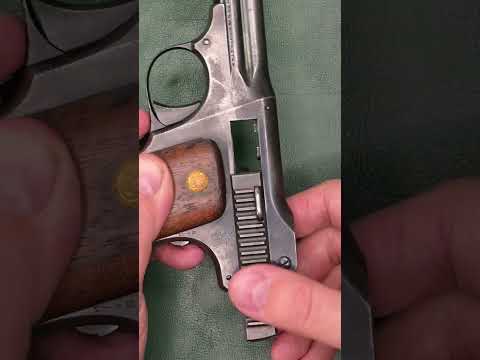
Beretta Model 1923

Published on August 28, 2016
Duration: 9:20

This guide details the field stripping process for the Beretta Model 1923, as demonstrated by Ian McCollum. It covers the steps for safely disassembling the pistol into its primary components, highlighting the unique use of the safety lever as a slide lock and providing insights into its internal mechanics. The video emphasizes historical context and technical details, offering an expert-level look at this classic firearm.

Quick Summary

The Beretta Model 1923, chambered in 9mm Glisenti, was the first Beretta pistol with an exposed hammer and featured a simple blowback action. Approximately 10,400 were produced, with notable military contracts from Bulgaria and Italy. Its disassembly utilizes the safety lever as a slide lock, revealing internal components like a fiber buffer pad.

Chapters

  1. 00:00Introduction and Lineage
  2. 00:35Caliber and Compatibility
  3. 01:32Production and Contracts
  4. 03:56Shoulder Stock Lugs
  5. 05:04Exposed Hammer Innovation
  6. 06:20Disassembly Walkthrough
  7. 07:19Internal Mechanics

Frequently Asked Questions

What caliber is the Beretta Model 1923 chambered in?

The Beretta Model 1923 is chambered in 9mm Glisenti. While Beretta claimed it could safely fire 9mm Parabellum, this is generally considered a marketing tactic as the 9mm Glisenti cartridge is loaded significantly lighter.

What is the production total for the Beretta Model 1923?

Approximately 10,400 units of the Beretta Model 1923 were produced between 1923 and 1925. Major buyers included Bulgaria and the Italian Army.

What notable design feature did the Beretta Model 1923 introduce?

The Beretta Model 1923 was the first Beretta pistol to feature an exposed hammer. This design element became a standard feature on subsequent Beretta models, such as the Model 1934 and 1935.

How is the Beretta Model 1923 field stripped?

Field stripping involves using the safety lever as a slide lock to remove the slide from the frame, followed by removing the barrel and recoil spring assembly. Internal components like the fiber buffer pad are then accessible.

Related News

All News →

More Gunsmithing & DIY Videos You Might Like

More from Forgotten Weapons

View all →