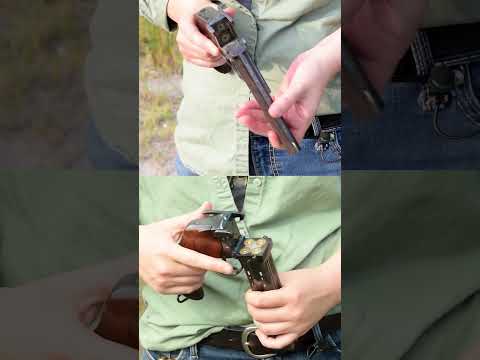
Clips: Lefaucheux, the exception to Othais' rule.

Published on December 22, 2021
Duration: 2:40

This video highlights an exception to a common revolver timing check method using a Swedish Lefaucheux revolver. The standard method of firing the hammer and holding the trigger to check cylinder lock-up fails on this specific firearm due to its design and conversion process. The cylinder rotates freely when the hammer falls, indicating a timing issue.

Quick Summary

The common method for checking revolver timing by firing the hammer and holding the trigger down fails on certain revolvers like the Swedish Lefaucheux. This is because their cylinder stop retracts as the hammer falls, allowing the cylinder to rotate freely at the moment of impact, unlike revolvers where the stop remains engaged.

Chapters

  1. 00:03Introduction: Clips Series
  2. 00:10Revolver Timing Method Explained
  3. 00:25The Swedish Lefaucheux Exception
  4. 00:45Center Fire Conversion Issues
  5. 00:50Cylinder Lock-up Check Failure
  6. 01:07Firing and Cylinder Rotation
  7. 01:18Damage and Play in Cylinder
  8. 01:33Mechanism: Cylinder Stop and Hammer
  9. 01:46Hammer Fall and Cylinder Retraction
  10. 01:57Cracked Firing Pin Warning
  11. 02:02Dry Firing Caution
  12. 02:14Method's General Applicability

Frequently Asked Questions

What is the common method for checking revolver timing, and why does it fail on some revolvers like the Lefaucheux?

The common method involves firing the hammer on an unloaded revolver, holding the trigger down, and checking for cylinder play. This fails on revolvers like the Swedish Lefaucheux because their cylinder stop retracts as the hammer falls, allowing the cylinder to rotate freely at the moment of impact, unlike revolvers where the stop remains engaged.

What is the function of the cylinder stop in a revolver, and how does it operate differently on a Lefaucheux?

The cylinder stop's primary function is to lock the cylinder in place, preventing unwanted rotation. On a Lefaucheux, the cylinder stop is designed to retract when the hammer falls, which means the cylinder is unlocked during the firing sequence, allowing it to spin freely.

Can you dry fire any revolver safely? What are the risks?

No, you cannot dry fire every revolver safely. It depends on the gun's design, era, and how many times it's dry-fired. Excessive dry firing can damage components like the firing pin, as evidenced by the cracked firing pin on the Lefaucheux discussed in the video.

More Gunsmithing & DIY Videos You Might Like

More from C&Rsenal

View all →