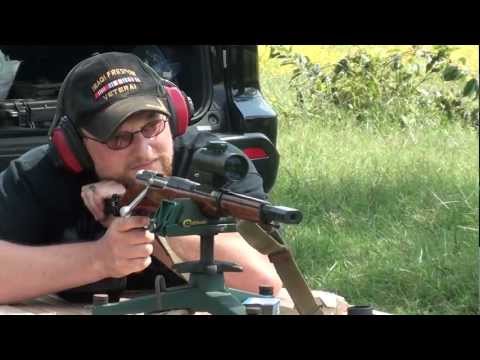
DuraCoat Firearm Finishing Intro by Nutnfancy

Published on January 16, 2009
Duration: 8:02

This video provides a comprehensive guide to applying DuraCoat firearm finish, demonstrated by Nutnfancy on a Remington 700 Police rifle. It covers essential preparation steps, including sanding and masking, and details the mixing ratios and airbrush application process. The tutorial highlights DuraCoat's durability compared to standard spray paints and its 'no-bake' air-dry curing method.

Quick Summary

DuraCoat firearm finish requires a 12:1 mixing ratio of paint to hardener and cures via a 'no-bake' air-dry process. Proper surface preparation is crucial: degrease Parkerized parts, and sand blued/polished surfaces for adhesion.

Chapters

  1. 00:00DuraCoat Application Demo
  2. 00:42Project: Remington 700P Refinish
  3. 01:52DuraCoat Kit Components & Mixing
  4. 03:32Equipment & Prep Work (Airbrush, Sanding)
  5. 04:41Curing & Surface Prep Details
  6. 06:00Final Thoughts & Durability Comparison

Frequently Asked Questions

What is the correct mixing ratio for DuraCoat?

The standard mixing ratio for DuraCoat is 12 parts paint to 1 part hardener. A reducer may also be used depending on the application method and environmental conditions for optimal flow.

How should I prepare different firearm surfaces for DuraCoat?

Parkerized surfaces need only degreasing. Blued or polished surfaces require roughening, typically through sanding, to ensure proper adhesion of the DuraCoat finish.

Does DuraCoat require baking to cure?

No, DuraCoat uses a 'no-bake' air-dry process. This means the finish cures at room temperature, making it a convenient DIY option without the need for specialized ovens.

What equipment is needed for DuraCoat application?

Essential equipment includes the DuraCoat kit, an airbrush, an air compressor (preferred over canned propellant for consistency), degreaser, masking tape, and sandpaper (e.g., 400-grit).

More Gunsmithing & DIY Videos You Might Like

More from nutnfancy

View all →