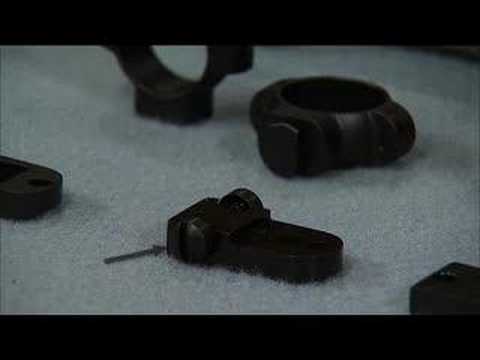
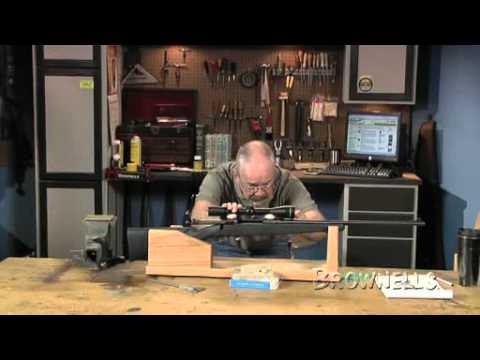
Gunsmithing - How to Choose A Rifle Scope Presented by Larry Potterfield of MidwayUSA

Published on November 22, 2013
Duration: 11:07

This video provides a comprehensive guide to choosing a rifle scope, covering essential terminology like objective bell, eyepiece, and tube sizes (1-inch, 30mm). It details adjustment dials for windage and elevation, advanced features like side focus and illuminated reticles, and optical concepts such as eye relief and field of view. The guide also explains how to select appropriate scope power based on application, discusses reticle types, parallax adjustment, focal planes, and measurement units like MOA and Mils.

Quick Summary

Rifle scopes improve accuracy by offering magnification over iron sights. Key components include the tube, objective lens for light, and eyepiece. Features like power rings, windage/elevation dials, side focus, and illuminated reticles enhance usability. Optical concepts like eye relief and Field of View (FOV) are critical for safety and performance.

Chapters

  1. 00:00Introduction to Rifle Scopes
  2. 00:31Scope Terminology: Body and Lenses
  3. 01:26Adjustment Dials and Rings
  4. 02:21Advanced Features Explained
  5. 02:48Optical Concepts: Eye Relief & FOV
  6. 03:39Light Transmission and Exit Pupil
  7. 04:51Choosing Scope Power by Application
  8. 07:21Reticle Types Explained
  9. 08:05Parallax and Focal Planes
  10. 09:20Measurement Units: MOA and Mils

Frequently Asked Questions

What are the main parts of a rifle scope?

A rifle scope consists of the main body (tube), objective bell/lens for light transmission, and the eyepiece/ocular lens. It also features adjustment dials for windage and elevation, and potentially a power ring for variable magnification.

How does eye relief affect rifle scope choice?

Eye relief is the distance from the ocular lens to your eye. It's crucial for preventing injury from recoil, especially on powerful firearms. Ensure adequate eye relief for safe and comfortable shooting.

What is the difference between MOA and Mils for scope adjustments?

MOA (Minute of Angle) is about 1 inch at 100 yards, while Mil (Milliradian) is 1/1000th of the distance. Both are used for scope adjustments and range estimation, with Mils often favored in tactical applications.

How do I choose the right magnification for my rifle scope?

Magnification choice depends on application. Low power (1.5-6x) is good for dangerous game, mid-range (3.5-10x) for big game, and high power (6.5-20x) for varmint hunting or long-range precision.

Related News

All News →

More Gunsmithing & DIY Videos You Might Like

More from MidwayUSA

View all →