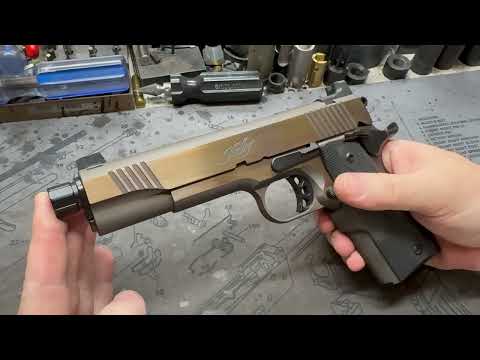
Gunsmithing the 1911: Trigger Job by "Terry G", Pt 2

Published on September 11, 2009
Duration: 28:36

Master Gunsmith Terry Gardner details a 1911 trigger job on a Taurus PT1911, focusing on achieving a crisp 4lb pull and reliable safety function. Key steps include stoning internal components, adjusting the trigger bow for proper reset, and meticulously fitting a Wilson Combat safety lever. The video also touches on 1911 brand quality, lubrication choices, and specific technical tips like recoil spring orientation.

Quick Summary

Master Gunsmith Terry Gardner demonstrates a 1911 trigger job, aiming for a crisp 4lb pull. Key steps include stoning internal components, adjusting trigger take-up and reset, and meticulously fitting a Wilson Combat safety lever to the sear for reliable function.

Chapters

  1. 00:00Introduction and Pull Weights
  2. 00:44Stoning Internal Components
  3. 01:34Testing Reset and Take-up
  4. 02:56Adjusting the Trigger Bow
  5. 04:00Fitting the Wilson Combat Safety
  6. 05:11Grinding and Fine-Tuning the Safety
  7. 07:461911 Brand Quality Discussion
  8. 13:08Lubrication Philosophy
  9. 14:45Measuring and Adjusting Pull Weight
  10. 17:43Grip Safety Modification
  11. 21:13Recoil Spring Orientation
  12. 22:35Final Assembly and Testing
  13. 25:05Gunsmithing Services and Pricing

Frequently Asked Questions

What is the recommended trigger pull weight for a defensive 1911 after a trigger job?

Master Gunsmith Terry Gardner aims for a crisp, safe trigger pull weight around 4 lbs for defensive use on a 1911. He adjusted this specific Taurus PT1911 down from 5.75 lbs to achieve this goal.

How do you ensure a 1911 safety lever functions correctly after installation?

Fitting a new safety lever, like a Wilson Combat model, involves hand-fitting the oversized lug to the specific sear. This requires careful grinding with tools like a Dremel, with multiple test fits to ensure it blocks the sear reliably without binding.

What are the key steps in performing a 1911 trigger job?

A 1911 trigger job involves stoning internal components (sear, disconnector), adjusting the trigger bow for proper take-up and reset, fitting safeties, and adjusting the three-finger spring to achieve the desired pull weight and break.

Why is proper lubrication important for a 1911?

Using synthetic lubricants like Weapon Shield is recommended because they maintain better lubricity across temperatures and are less prone to evaporating or gumming up compared to petroleum-based oils, ensuring smoother operation.

Related News

All News →

More Gunsmithing & DIY Videos You Might Like

More from nutnfancy

View all →