History Primer 193: Adams Revolvers Documentary | C&Rsenal

Published on April 2, 2024
Duration: 95:00

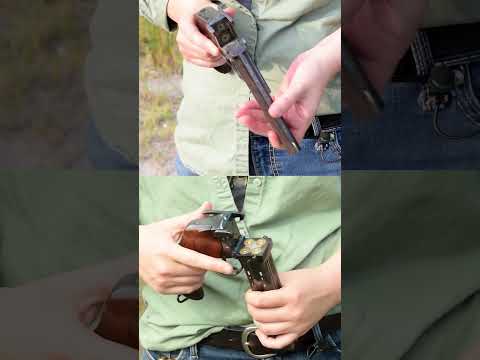
This guide details the process of loading and unloading the Adams New Patent Double-Action Revolver, specifically focusing on the Mark II and Mark III models. It covers the use of the gate loading system and the manual ejector rod. The video highlights the unique features and historical context of these British revolvers, emphasizing their transition from percussion to center-fire cartridges.


Quick Summary

The Adams New Patent Double-Action Revolver, including the Mark II and Mark III, was a significant British firearm chambered in .450 Adams. These revolvers featured a gate-loading system, a two-piece frame, and transitioned from percussion to center-fire cartridges, offering both single and double-action operation. Early models had ejector rod issues, improved in the Mark III.

Chapters

  1. 00:22Introduction: British Adams Revolver (Model 1866)
  2. 00:34Physical Specifications and Caliber
  3. 01:49The Center Fire Adams Revolver and Percussion Era Inheritance
  4. 01:55Robert Adams and the Dean & Adams Partnership
  5. 02:46Robert Adams' 1851 Patent: Self-Cocking Revolver
  6. 03:37Dean, Adams & Dean Firm and Competition with Colt
  7. 04:51Lieutenant Frederick E. B. Bowdlear and his 1855 Patent
  8. 05:57Robert Adams' 1854 Patent and the Bowdlear-Adams Revolver
  9. 06:49Ordnance Purchases During the Crimean War
  10. 07:30The Bowdlear-Adams with James Kerr's Loading Lever
  11. 08:15The Push for a Modern Government Arms Factory (RSAF Enfield)
  12. 09:02The London Armory Company Limited (LAC)
  13. 10:01British Army's Hesitation with Revolvers
  14. 11:32Robert Adams' Departure from LAC and John Adams' Emergence
  15. 12:48John Adams' 1857 Patent: Innovations in Revolver Design
  16. 13:43Robert Adams' Financial Troubles and Bankruptcy
  17. 15:45John Adams' 1861 Patent: Center Fire Cartridge and Loading Method
  18. 16:42Adams Patent Small Arms Company Limited (APSAC)
  19. 17:50John Adams' 1866 Patent: Improved Double Action Revolver
  20. 18:53Trials and Adoption of Adams Conversions (Mark I)
  21. 21:43John Adams' Improved Revolvers and the .450 Adams Cartridge
  22. 22:01Adoption by the Metropolitan Police Force
  23. 22:38Comparison with Other Breach Loading Designs
  24. 23:33The Adams Conversion (Mark I) Stamping and Refinishing
  25. 24:16Official Recommendation for Adoption of Adams Conversion
  26. 24:50The Pistol Revolver Dean and Adams Converted to Breach Loader Mark 1
  27. 25:16Navy's Need for Revolvers vs. Army's Indifference
  28. 25:45Colt's Conversion Offerings and Adams' Commercial Model B
  29. 26:23New Made John Adams Revolvers (1867 Patent)
  30. 28:29Close Look at a New Made Adams Revolver
  31. 30:05Ejector Rod Functionality and Safety
  32. 31:44Cylinder Disassembly and Arbor Retention
  33. 34:08Loading the Adams Revolver
  34. 34:28Internal Lockwork: Hammer, Sear, Hand, and Strut
  35. 36:13Unloading the Adams Revolver
  36. 36:36New Made John Adams Revolvers Presented to the War Department
  37. 38:25Mark II and Mark I Differences and Markings
  38. 39:20Handling the Adams Revolver
  39. 41:12Adams Mark II Configurations and Production Estimates
  40. 42:07Cost of the Mark I and Mark II
  41. 42:14Interchangeability Issues in Adams Revolvers
  42. 43:03Service Problems: Ejector Rod Robustness
  43. 43:22The Adams Mark III: Improved Ejector System
  44. 44:28Comparing Mark II and Mark III Ejectors and Frames
  45. 45:06Unloading the Mark III Revolver
  46. 45:57Cylinder Alignment Improvement in Mark III
  47. 47:25Mark I-III Production Relationship and Overlap
  48. 49:59Total Production Numbers for Adams Revolvers
  49. 50:43The Adams Mark V: Modifications and Mystery
  50. 52:01Service History of Adams Revolvers
  51. 53:33Canadian Northwest Mounted Police and Adams Revolvers
  52. 54:44Army's Slow Thaw Towards Breach Loading Sidearms
  53. 55:53Navy Mark III Approval for Cavalry and Lancers
  54. 56:12Improved .450 Cartridge and Mass Production Demand
  55. 57:39John Adams' Slow Sales and Competition
  56. 57:57The Webley Revolver as a Competitor
  57. 58:26Adams Revolver Service Throughout the Empire
  58. 59:02Cartridge Debate: Stopping Power and Accuracy Concerns
  59. 60:01Enfield Mark I and Displacement of Adams Revolvers
  60. 60:19John Adams Sells His Business to William Watts
  61. 61:10Enfield Revolver Advancements
  62. 61:33Adams Revolvers Withdrawn from Service and Declared Obsolete
  63. 61:44Colonial and Police Service of Adams Revolvers
  64. 62:19Adams Revolvers Before and During WWI
  65. 62:50Adams Revolvers as Emergency Sidearms in WWII
  66. 63:14Conclusion: The Adams Revolver's Legacy
  67. 64:21May's Hands-On Review: Adams Mark II Revolver
  68. 65:25British Aesthetics and Design of Adams Revolvers
  69. 66:26Grip Feel and Ergonomics
  70. 66:43Hammer Spur and Trigger Pull
  71. 67:07Action Simplicity vs. Complexity: Springs and Parts
  72. 67:45.450 Adams Primers and Hammer Force
  73. 68:10Surprise at Light Hammer Pull
  74. 68:40Ejector Rod Operation and Feel
  75. 69:48Gate Loading Mechanism and Alignment Challenges
  76. 70:26Trigger Reset and Release Characteristics
  77. 70:30Sights: V-Notch Rear and Blade Front

Frequently Asked Questions

What are the key features of the Adams New Patent Double-Action Revolver?

The Adams New Patent Double-Action Revolver, like the Mark II and Mark III, features a solid frame construction, a gate-loading system, and a manually operated ejector rod. It was chambered in .450 Adams and transitioned from percussion to center-fire cartridges, offering both single and double-action firing modes.

How is the .450 Adams cartridge different from other contemporary cartridges?

The .450 Adams was a black powder, center-fire metallic cartridge designed for Adams revolvers. It utilized the existing bore of converted percussion revolvers and featured a bullet diameter suited for the .450 caliber. Its primers were generally softer than American counterparts, requiring less force to ignite.

What were the main differences between the Adams Mark I, Mark II, and Mark III revolvers?

The Mark I was an early conversion, while the Mark II was a new-made version. The primary improvement in the Mark III was a more robust and internally housed ejector rod, addressing issues with bending and breaking found in earlier models. The Mark III also featured improved cylinder alignment for loading and unloading.

Why was the Adams revolver initially not widely adopted by the British Army?

The British Army adhered to strict doctrine that prioritized specialized roles, considering handguns less important than rifles or sabers. This conservatism, coupled with the Army's focus on other firearm developments, led to a slow adoption of revolvers like the Adams, despite their technical advancements.

More from C&Rsenal

View all →