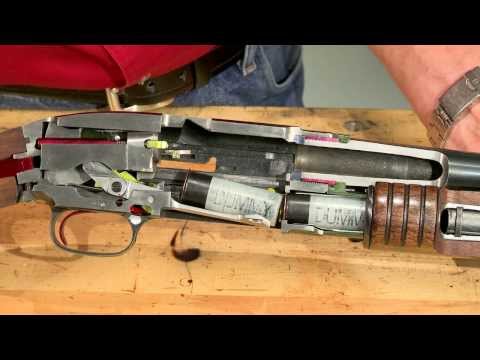
How to Build an AR-15 Upper Receiver Presented by Larry Potterfield of MidwayUSA

Published on June 26, 2013
Duration: 28:56

This guide details the professional assembly of an AR-15 upper receiver, covering essential tools and step-by-step procedures. Key processes include installing the ejection port cover, forward assist, and A2 rear sight, followed by critical safety checks like headspace verification. The video also demonstrates bolt assembly, carrier key staking, and final barrel installation with precise torque specifications.

Quick Summary

To build an AR-15 upper receiver, gather specialized tools like torque wrenches and headspace gauges. Key steps include installing the ejection port cover, forward assist, and A2 rear sight. Crucially, verify headspace with 'Go' and 'No-Go' gauges for safety before final barrel installation.

Chapters

  1. 00:00Tools Required for AR-15 Upper Build
  2. 01:37Installing the AR-15 Ejection Port Cover
  3. 02:58How to Install the Forward Assist
  4. 04:26Assembling the A2 Rear Sight
  5. 11:49Crucial Headspace Check for Safety
  6. 13:12Building the AR-15 Bolt Assembly
  7. 15:55Staking the Bolt Carrier Key
  8. 17:16Final Bolt Carrier Group Assembly
  9. 19:37Delta Ring and Barrel Preparation
  10. 20:55AR-15 Barrel Installation and Torque
  11. 22:19Front Sight and Compensator Installation

Frequently Asked Questions

What are the essential tools for building an AR-15 upper receiver?

Essential tools include needle-nose pliers, various hammers, punches, a center punch, grease, oil, and a torque driver like the Wheeler FAT wrench. Specialized items like an action block, torque wrench, snap ring pliers, gas tube alignment gauge, and headspace gauges are also required for a professional build.

How do you ensure the AR-15 barrel is installed correctly?

Apply anti-seize to receiver threads, index the barrel, hand-tighten the barrel nut, then torque to 30 ft-lbs, loosen, and re-torque three times. Final torque (30-80 ft-lbs) is applied until a nut notch aligns with the gas tube hole, then the gas tube is pinned.

Why is checking headspace important when building an AR-15?

Headspace must be verified for safety. Using 'Go' and 'No-Go' gauges, the bolt should close on 'Go' but not on 'No-Go'. Failure indicates a need to replace the bolt or barrel to prevent dangerous malfunctions like case ruptures.

What is the correct torque specification for the AR-15 bolt carrier key screws?

The bolt carrier key screws must be torqued to 35 inch-pounds. After torquing, metal must be displaced from the carrier into the screw heads using a center punch and hammer to physically lock them in place, preventing loosening.

Related News

All News →

More Gunsmithing & DIY Videos You Might Like

More from MidwayUSA

View all →