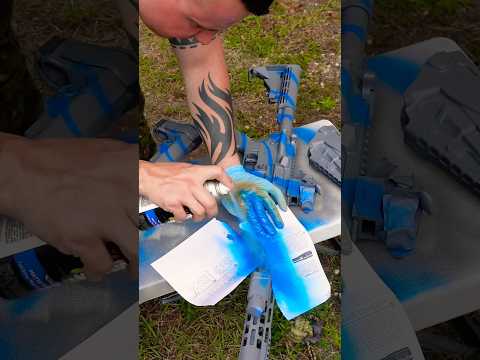
How to Paint Your Firearm: Camo Patterns

Published on November 20, 2023
Duration: 19:48

This guide details methods for applying camouflage patterns to firearms using Alumahyde II. It covers techniques involving netting, custom-made stencils, and paper masking. The video emphasizes proper PPE, preparation, and curing processes, including both air curing and accelerated oven curing. It also touches on planning patterns based on the intended environment.


Quick Summary

Learn to paint firearm camouflage patterns using netting and stencils with Alumahyde II. Proper PPE, surface prep, and understanding curing windows are key. Netting creates fading effects, while stencils offer defined patterns. Speed curing in an oven is an option for faster results.

Chapters

  1. 00:00Introduction to Firearm Painting: Camo Patterns
  2. 00:22Essential PPE and Preparation Overview
  3. 01:26Using Netting for Camouflage Patterns
  4. 02:55Exploring Camo Stencils: Commercial and DIY
  5. 03:55Alumahyde II Curing Times and Stencil Application
  6. 05:23Paper Masking Technique for Camo Patterns
  7. 07:18Planning Your Camo Pattern: Environmental Considerations
  8. 10:56Applying Alumahyde II: Thin Coats and Assembly
  9. 15:31Spraying Through Netting: Achieving Fading Effects
  10. 16:27Drying and Curing Procedures for Alumahyde II
  11. 17:54Speed Curing in the Oven and Reassembly
  12. 18:21Final Result: Painted Firearm Showcase
  13. 18:46Conclusion and Future Content

Frequently Asked Questions

What are the primary methods for applying camouflage patterns to firearms?

Firearm camouflage patterns can be applied using netting, which creates a fading effect, or stencils, which produce sharper lines. Both commercial and custom-made stencils are viable options. Torn paper can also be used for unique, irregular patterns.

How does the curing time of Alumahyde II affect stencil application?

Once Alumahyde II is fully cured, it becomes solvent-resistant, allowing for the use of stick-on stencils without fear of them lifting the paint. Applying stencils before full cure can damage the finish.

What PPE is recommended when painting firearms with Alumahyde II?

When painting firearms, it's crucial to wear appropriate Personal Protective Equipment (PPE). This includes gloves to protect your skin, a respirator with particulate filters to prevent inhalation of fumes, and eye protection to safeguard your vision.

Can you speed up the curing process for Alumahyde II?

Yes, Alumahyde II can be speed-cured in an oven at the manufacturer's recommended temperature. This is an alternative to the standard 10-14 day air-curing process, allowing for quicker reassembly and use of the firearm.

More Gunsmithing & DIY Videos You Might Like

More from Brownells, Inc.

View all →