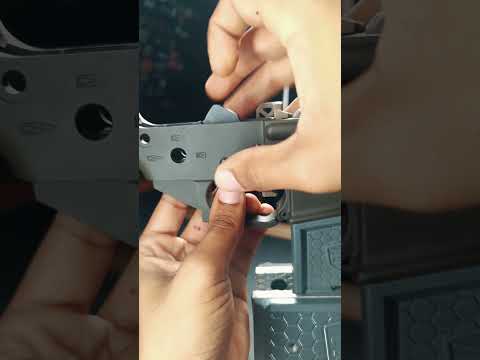
Jack Rowe, Master Gunsmith Series, Trigger Pull. Part 1 of 3.

Published on May 30, 2012
Duration: 9:49

Master Gunsmith Jack Rowe details the process of adjusting firearm trigger pull weight by modifying the sear nose angle. He emphasizes precision, using specific tools like carborundum stones and trigger testers, and highlights the dangers of overly light triggers. Rowe also explains how to address trigger drag and creep by adjusting the hammer bent or sear nose.

Quick Summary

Firearm trigger pull weight is adjusted by modifying the angle on the sear's nose. To decrease pull weight, make the angle less acute; to increase it, make it more acute. This requires precise filing with tools like carborundum stones and careful testing with a trigger tester to avoid unsafe conditions.

Chapters

  1. 00:15Trigger Pull Adjustment Basics
  2. 00:44Danger of Overly Light Triggers
  3. 01:46Trigger Adjustment Method
  4. 02:22Sear Nose Geometry
  5. 03:01Precision in Adjustment
  6. 03:20Demonstration Sear
  7. 03:34Tools for Adjustment
  8. 04:24Testing Trigger Weight
  9. 05:53Trigger Tester Usage
  10. 06:25Iterative Adjustment Process
  11. 06:47Addressing Trigger Drag/Creep
  12. 07:14Curing Trigger Drag
  13. 08:24Careful Removal of Drag
  14. 09:16Drag on Second Trigger

Frequently Asked Questions

How is firearm trigger pull weight adjusted?

Trigger pull weight is adjusted by altering the angle on the nose of the sear. To decrease pull weight, the angle is made less acute; to increase it, the angle is made more acute. This requires precision filing with tools like carborundum stones or diamond files.

What are the risks of making a firearm trigger too light?

Making a trigger excessively light is dangerous as it can lead to accidental discharges when the firearm is jarred. This poses a significant safety risk and can result in severe liability and potential lawsuits for the gunsmith or owner.

How can trigger drag or creep be fixed?

Trigger drag or creep can be addressed by modifying the 'bent' on the hammer or, more commonly, by carefully removing a small amount from the corner of the sear nose. This process requires incremental filing and frequent testing.

What tools are needed for trigger pull adjustment?

Essential tools for trigger pull adjustment include a carborundum stone or diamond-coated/needle files for altering the sear nose angle. A trigger tester is also crucial for accurately measuring the pull weight after each adjustment.

Related News

All News →

More Gunsmithing & DIY Videos You Might Like

More from Brownells, Inc.

View all →