M16A2 Conversion Program

Published on November 15, 2025
Duration: 26:08

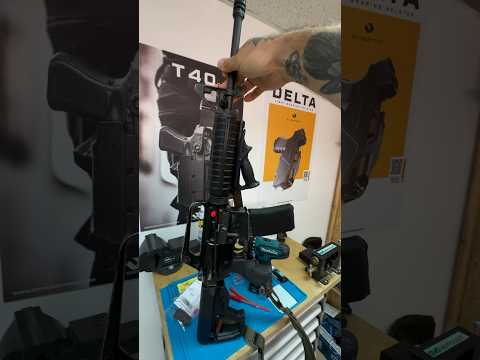
This video details the M16A2 conversion program, explaining the technical reasons for upgrading older M16 and M16A1 rifles, primarily driven by the adoption of the M855 62-grain projectile and the need for a 1:7 inch barrel twist rate. It covers the components of conversion kits, the process of modifying lower receivers with new markings, and potential compatibility issues when reusing older parts like bolt carrier groups. The information is presented with the authority of a firearms historian and former industry professional.

Quick Summary

The M16A2 conversion program upgraded older M16/M16A1 rifles due to the M855 62-grain projectile requiring a 1:7 inch barrel twist rate. Kits included A2 uppers, stocks, and burst fire controls, with armorers modifying lower receivers and reusing original bolt carrier groups. Converted parts are identifiable by forging codes like 'P' (Capco) or 'E' (Emco).

Chapters

  1. 00:00Introduction to M16A2 Conversion Kits
  2. 00:42Reasons for the Conversion Program (M855 Ammo)
  3. 01:22Lower Receiver Suitability
  4. 02:44Conversion Kit Components
  5. 03:26Manufacturers and Implementation
  6. 05:15Modifying the Lower Receiver Markings
  7. 09:22Upper Receiver and BCG Compatibility Issues
  8. 11:47Historical Usage and Reliability Concerns
  9. 13:22Modern Conversion Programs
  10. 15:18Identifying Converted Components (Forging Codes)

Frequently Asked Questions

What was the primary reason for the M16A2 conversion program?

The main driver was the NATO standardization of the M855 62-grain projectile, which required a faster 1:7 inch barrel twist rate for stabilization. Older M16 and M16A1 rifles with 1:12 twist barrels were not optimal for this new standard ammunition.

What parts were typically included in an M16A2 conversion kit?

A standard kit usually contained a complete M16A2 upper receiver (minus the bolt carrier group and charging handle), an A2 stock assembly, a burst fire control group, and an A2 pistol grip. Armorers would reuse the original BCG and charging handle.

How were M16A2 conversion parts identified?

Converted parts, especially those made by subcontractors like Capco and Emco, can be identified by specific forging codes stamped on the components. 'P' typically indicates Capco, while 'E' indicates Emco.

What challenges could arise when converting older M16 rifles to M16A2 standard?

Challenges included potential compatibility issues with older bolt carrier groups, particularly early chrome-plated versions lacking forward assist notches. Additionally, the quality control of subcontracted conversion parts could sometimes lead to reliability problems.

Related News

All News →

More Gunsmithing & DIY Videos You Might Like

More from SmallArmsSolutions

View all →