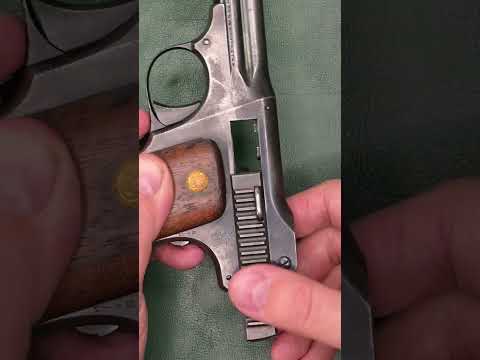
Odd Iver Johnson prototypes

Published on September 8, 2016
Duration: 6:07

This guide outlines the basic understanding of the Iver Johnson prototype pistols discussed by Ian McCollum. It covers the unique safety features, design elements like the striker-fired mechanism and spring location, and grip attachment methods. Due to the rarity and lack of documentation, detailed disassembly is not provided, but a crucial safety check is emphasized. The information is presented with the high authority of an expert in rare firearms.

Quick Summary

Expert Ian McCollum analyzes rare Iver Johnson prototype .32 ACP pistols, highlighting their striker-fired, blowback action, 8-round capacity, and unique safety features including a manual thumb safety and front-strap grip safety. The design evolution and grip panel attachment via dovetail slots are also discussed.

Chapters

  1. 00:00Introduction to Iver Johnson Prototypes
  2. 00:56Design and Ergonomics
  3. 01:39Mechanical Features and Safeties
  4. 03:09Comparison of Prototype Stages
  5. 04:56Conclusion and Auction Details

Frequently Asked Questions

What are the key safety features of the Iver Johnson prototype pistols?

These Iver Johnson prototypes feature both a manual thumb safety and a distinct front-strap grip safety. The grip safety must be depressed for the trigger mechanism to function, adding a layer of passive safety during handling.

What caliber and action type do the Iver Johnson prototype pistols use?

The Iver Johnson prototype pistols discussed are chambered in .32 ACP. They employ a striker-fired, blowback action, with the recoil spring located above the barrel.

How are the grip panels attached on these Iver Johnson prototypes?

The grip panels on the Iver Johnson prototype pistols are secured using dovetail slots. This method is noted by the presenter as being similar to the attachment system found on Ortgies pistols.

What is the significance of the two different Iver Johnson prototypes shown?

The video showcases two prototypes: one in an early 'in the white' stage and a more refined, blued version. This comparison highlights the evolutionary design process, with the later iteration incorporating enhanced safety features.

Related News

All News →

More Gunsmithing & DIY Videos You Might Like

More from Forgotten Weapons

View all →