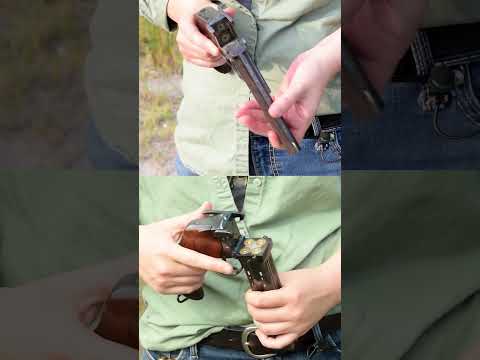
Pieper Revolving Carbine 2

Published on November 7, 2025
Duration: 2:35

This video provides an in-depth mechanical breakdown of the Pieper Revolving Carbine, focusing on its unique gas-operated system and stretched-out rifle configuration. It details the single and double-action lockwork, explaining how the hammer, trigger, and various arms interact to cycle the action, lock the cylinder, and ensure proper sealing. The explanation highlights the system's complexity compared to simpler designs while illustrating its functional mechanics.


Quick Summary

The Pieper Revolving Carbine features a unique gas-operated system configured for a rifle, with distinct single and double-action lockwork. The hammer notch engages a trigger extension for single action, while a sprung hammer nose facilitates double action. A tines and hinged block mechanism seals the cylinder, reinforced by the hammer.

Chapters

  1. 00:01Introduction: Pieper Revolving Carbine
  2. 00:05Unusual Features: Gas-Operated & Rifle Length
  3. 00:17Basic Lockwork: Single Action Engagement
  4. 00:29Double Action Mechanism
  5. 00:42Extended FUE-Style Lockwork
  6. 01:01Sprung Hand and Armature
  7. 01:14Trigger Interaction and Cylinder Rotation
  8. 01:33Tines and Hinged Block Mechanism
  9. 01:45Cylinder Sealing and Hammer Reinforcement
  10. 02:00Cylinder Release and Rotation
  11. 02:09Locking Bolt Functionality
  12. 02:21Cylinder Alignment Stop

Frequently Asked Questions

What makes the Pieper Revolving Carbine's operating system unusual?

The Pieper Revolving Carbine is unusual because it features a gas-operated system that deviates from conventional designs and is configured as a stretched-out rifle, creating unique mechanical challenges and solutions.

How does the Pieper Revolving Carbine achieve single-action firing?

For single-action firing, a notch on the hammer engages a rear extension on the trigger. This locks the mechanism, requiring the hammer to be manually cocked before the trigger can be pulled to release it.

Explain the double-action mechanism of the Pieper Revolving Carbine.

In double-action mode, a sprung hammer nose acts as a dog. It strikes the same surface as the single-action engagement but pushes it away, allowing the hammer to fall and fire the weapon with a single trigger pull.

How does the Pieper Revolving Carbine seal the cylinder?

The firearm uses a set of tines that push a hinged block forward to seal the cylinder into place. The hammer further reinforces this seal after the action cycles, ensuring tightness until discharge.

More Gunsmithing & DIY Videos You Might Like

More from C&Rsenal

View all →