Swiss Military Pistols - Luger P210 P220

Published on September 10, 2018
Duration: 21:14

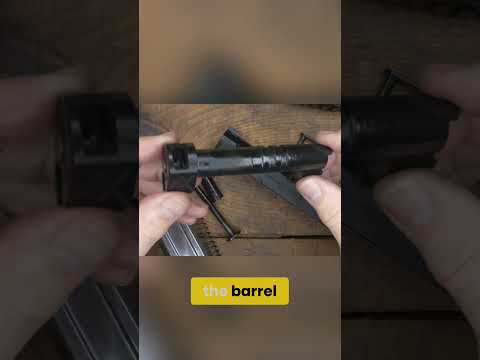
This guide details the field stripping process for the Sig P210 (Pistole 49), a highly precise 9mm pistol. It covers the basic steps for disassembly, emphasizing the importance of safety checks. The P210 is noted for its all-steel construction, low bore axis, and inverted rail design, contributing to its renowned accuracy.

Quick Summary

The Sig P210 (Pistole 49), adopted by Switzerland in 1949, is an all-steel 9mm pistol celebrated for its extreme precision. Its design features a low bore axis and an inverted rail system, contributing to mild recoil and excellent control. Military versions are identifiable by an 'A' serial number prefix.

Chapters

  1. 00:00Swiss Luger Overview
  2. 01:23Sig P210 (Pistole 49) History and Features
  3. 03:56Shooting the P210
  4. 06:39Sig P220 (Pistole 75) Introduction
  5. 09:43Technical Comparison and Field Stripping

Frequently Asked Questions

What distinguishes the Swiss Luger from German versions?

The Swiss Luger features a grip safety, a different pistol grip contour, and the iconic Swiss cross marking, differentiating it from standard German Luger models. It was adopted in 1900 and chambered in .30 Luger (7.65x21mm).

How can one identify a military-issue Sig P210?

Military versions of the Sig P210 (Pistole 49) are typically identified by an 'A' serial number prefix, fixed sights, and black polymer grips. These pistols were adopted in 1949 and are known for their exceptional precision.

What are the key differences between the Sig P210 and the Sig P220?

The P210 is an all-steel, single-action pistol prized for accuracy, while the original Swiss P220 (Pistole 75) is a DA/SA pistol with an aluminum alloy frame, featuring a decocker and one more round of capacity (9 vs 8).

What makes the Sig P210's shooting characteristics notable?

The P210's shooting experience is characterized by mild recoil and high controllability due to its very low bore axis and the smooth action, often described as feeling like it's 'on ball bearings' thanks to its precise construction and inverted rails.

Related News

All News →

More Gunsmithing & DIY Videos You Might Like

More from Military Arms Channel

View all →