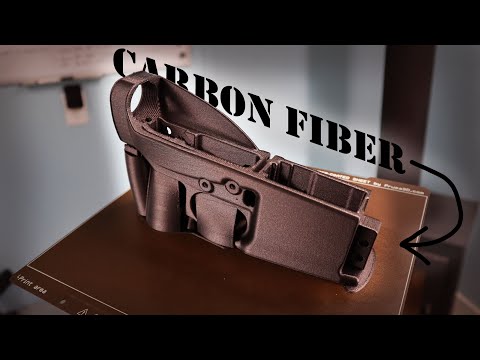
Testing 3D870 PLA | My New Testing Method

Published on July 28, 2021
Duration: 20:01

This video details a comprehensive testing methodology for 3D printing filaments, specifically focusing on 3D870 PLA. The instructor outlines steps for calibrating extrusion, determining optimal printing temperatures, and testing impact resistance and tensile strength across different print orientations. An experimental method for assessing high-temperature performance is also demonstrated, highlighting the importance of consistent testing protocols for accurate material property evaluation.

Quick Summary

Testing reveals 3D870 PLA filament has an optimal printing temperature around 250°C. Horizontally printed parts exhibit superior impact resistance (approx. 4.4 ft-lbs) and tensile strength (8570 PSI) compared to vertically printed parts (approx. 1.1 ft-lbs impact, 5500 PSI tensile). The filament shows poor heat resistance, yielding at 150°F with minimal force.

Chapters

  1. 00:00Introduction & Platform Announcement
  2. 01:12Filament Testing: 3D870 PLA
  3. 01:43Test Sample Preparation
  4. 03:45Testing Process Background
  5. 04:44Optimal Temperature Determination
  6. 05:44Impact Testing: Horizontal Samples
  7. 08:34Impact Testing: Vertical Samples
  8. 09:34Tensile Testing: Horizontal Samples
  9. 10:53Tensile Testing: Vertical Samples
  10. 12:29High-Temperature Resistance Testing
  11. 16:29Results Summary & Spreadsheet Review
  12. 17:08Explanation of Testing Units
  13. 18:32Conclusion & Future Testing

Frequently Asked Questions

What is the optimal printing temperature for 3D870 PLA filament?

Based on the testing, the optimal nozzle temperature for 3D870 PLA filament to achieve maximum strength was found to be around 250°C. Temperatures significantly above or below this point resulted in a decrease in material strength.

How does print orientation affect the impact resistance of 3D870 PLA?

Print orientation significantly impacts impact resistance. Horizontally printed samples of 3D870 PLA absorbed approximately 4.4 foot-pounds of energy, while vertically printed samples absorbed only about 1.1 foot-pounds, indicating much greater brittleness in vertical prints.

What is the tensile strength of 3D870 PLA when printed horizontally versus vertically?

When printed horizontally, 3D870 PLA achieved an average tensile strength of 8570 PSI. Vertically printed samples, which include layer adhesion in the test, had a lower tensile strength of 5500 PSI.

How does 3D870 PLA perform under elevated temperatures?

In an experimental test, 3D870 PLA samples heated to around 150°F yielded with very little force (24 pounds), showing poor heat resistance. This suggests it is not suitable for applications involving significant heat exposure.

More Gunsmithing & DIY Videos You Might Like

More from Hoffman Tactical

View all →