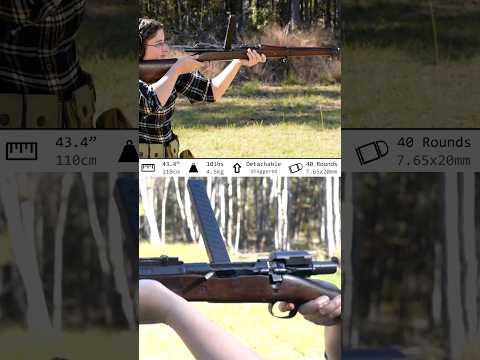
The Pedersen device- semi-automatic 1903 Springfield conversion| Unicorn Guns with Jerry Miculek

Published on November 5, 2014
Duration: 4:41

The Pedersen device, a rare WWI-era conversion, transformed the bolt-action 1903 Springfield into a semi-automatic rifle using a .30 caliber pistol cartridge. Designed by John Pedersen for trench warfare, it featured a 40-round magazine and a high rate of fire. The conversion process involved swapping the bolt for the device and was a top-secret project with few surviving examples.

Quick Summary

The Pedersen Device converted the M1903 Springfield bolt-action rifle into a semi-automatic weapon for WWI trench warfare. It used a 40-round magazine and fired a .30 caliber pistol cartridge at approximately 1400 fps, significantly increasing firepower.

Chapters

  1. 00:00Introduction: Pedersen Device & 1903 Springfield
  2. 00:22Purpose: WWI Trench Warfare Conversion
  3. 01:08Conversion Process: Bolt Swap & Magazine
  4. 01:51Technical Specs: .30 Caliber, 40-Round Mag
  5. 03:05Rarity & Secret History
  6. 03:30Infantry Gear & Carrying System

Frequently Asked Questions

What was the purpose of the Pedersen Device?

The Pedersen Device was designed by John Pedersen to convert the standard bolt-action 1903 Springfield rifle into a semi-automatic weapon. Its primary purpose was to provide increased firepower for close-quarters trench warfare during World War I.

How did the Pedersen Device convert the M1903 Springfield?

The conversion involved removing the original bolt of the M1903 Springfield and replacing it with the Pedersen Device. This allowed the rifle to accept a 40-round magazine and function as a semi-automatic firearm.

What caliber cartridge did the Pedersen Device use?

The Pedersen Device fired a specialized .30 caliber pistol cartridge, designated the .30-18 Pedersen. This cartridge offered a higher rate of fire compared to the standard .30-06 rifle cartridge used in the bolt-action configuration.

How rare is the Pedersen Device today?

The Pedersen Device is exceptionally rare. It was a top-secret project during its development, and estimates suggest that only 40 to 100 units have survived to the present day, making it a highly sought-after historical firearm.

Related News

All News →

More Gunsmithing & DIY Videos You Might Like

More from Lena Miculek - Trigger Tribe

View all →