Touring Timney Triggers: Guns & Gear|S5

Published on October 11, 2013
Duration: 3:44

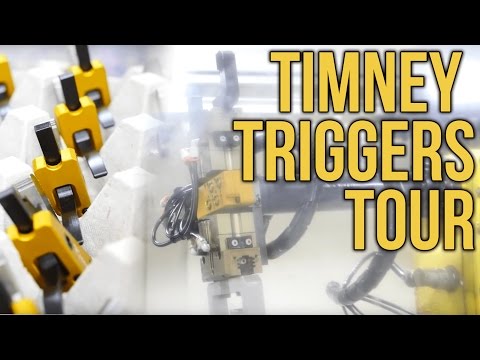
This video tours the new Timney Triggers plant in Arizona, highlighting their advanced manufacturing processes. It showcases CNC machines and robotic automation used to produce trigger housings from aluminum blocks, and wire EDM machines for cutting hardened steel components like AR-15 triggers and hammers. The emphasis is on precision, efficiency, and the critical role of human craftsmanship in assembly, hand adjustment, and rigorous testing to ensure flawless performance.


Quick Summary

Timney Triggers utilizes advanced manufacturing, including CNC machines with robotic automation and wire EDM, to produce high-quality aftermarket triggers. Each trigger undergoes rigorous 'torture testing' and individual hand adjustment to ensure flawless performance and a clean break, making every shooter more accurate.

Chapters

  1. 00:01Introduction to Timney Triggers
  2. 00:25CNC and Robotic Automation for Trigger Housings
  3. 01:27Wire EDM for Precision Steel Parts
  4. 01:46The Heart of the Operation: Assembly and Testing
  5. 02:33Trigger Demonstration: Standard vs. Timney
  6. 03:22Impact of a Good Trigger on Shooting

Frequently Asked Questions

How does Timney Triggers ensure the quality of their aftermarket triggers?

Timney Triggers employs rigorous quality control, including 'torture testing' each trigger on a rifle action before it leaves the facility. Additionally, every single trigger is hand-adjusted and felt by an individual to ensure it meets their high standards for performance and feel.

What advanced manufacturing techniques does Timney Triggers use?

Timney Triggers utilizes advanced manufacturing processes such as CNC machining with robotic automation for producing trigger housings from aluminum blocks. They also employ wire EDM machines for precise cutting of hardened steel components like AR-15 triggers and hammers.

How does a Timney trigger differ from a standard trigger?

A standard trigger often exhibits noticeable creep, meaning there's movement before the shot breaks. In contrast, a Timney trigger is designed for a clean break with no perceptible movement, leading to improved accuracy and a better shooting experience.

What is the role of human workers in Timney Triggers' manufacturing?

While machines handle tedious tasks, skilled human workers are crucial for innovation, design, assembly, and the critical hand-adjustment and testing phases. This combination of automation and human expertise ensures high-quality, reliable triggers.

More Gunsmithing & DIY Videos You Might Like

More from Gun Talk Media

View all →