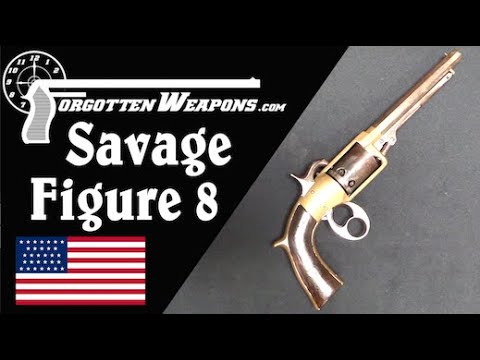
Whitney-Beals Walking Beam Pocket Revolver

Published on February 15, 2017
Duration: 8:47

This guide details the basic operation of the Whitney-Beals Walking Beam Pocket Revolver, focusing on its unique ring trigger indexing system. It emphasizes manual cocking and the necessity of cylinder removal for reloading, highlighting the firearm's historical significance and mechanical ingenuity. The information is presented with the authority of Ian McCollum, a recognized expert in rare firearms.

Quick Summary

The Whitney-Beals Walking Beam Pocket Revolver, patented in September 1854 by Fordyce Beals and manufactured by Eli Whitney, features a unique "walking beam" mechanism. This system uses a linkage inspired by steam engines to convert the linear motion of the ring trigger into rotational indexing of the cylinder, a design intended to circumvent Colt's patents.

Chapters

  1. 00:00Introduction to Whitney-Beals Revolver
  2. 01:18Eli Whitney's Manufacturing Role
  3. 02:18Variations and Markings
  4. 03:08Operation and Mechanism
  5. 04:10The Walking Beam Concept
  6. 06:37Fordyce Beals' Legacy

Frequently Asked Questions

What is the unique mechanism of the Whitney-Beals Walking Beam Pocket Revolver?

The Whitney-Beals Pocket Revolver features a "walking beam" mechanism, inspired by steam engines, which uses a linkage to translate the linear motion of the ring trigger into the rotational indexing of the cylinder for firing.

Who designed the Whitney-Beals Pocket Revolver and when was it patented?

The design for the Whitney-Beals Pocket Revolver was by Fordyce Beals and was patented in September 1854. Eli Whitney was involved as the manufacturer.

How is the Whitney-Beals Pocket Revolver reloaded?

Reloading the Whitney-Beals Pocket Revolver requires removing the cylinder from the frame. It does not possess a built-in loading lever like many later revolvers.

What calibers and capacities were available for the Whitney-Beals Pocket Revolver?

The standard model was a 7-shot .31 caliber pistol. However, 6-shot and .28 caliber variants were also produced.

More Gunsmithing & DIY Videos You Might Like

More from Forgotten Weapons

View all →