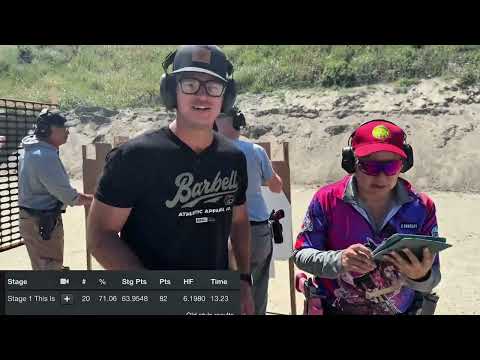
Our Favorite Target Transition Drill

Published on December 3, 2025
Duration: 5:53

This video details a target transition drill demonstrated by Ben Stoeger, a world-renowned competition shooter and instructor. The drill focuses on rapid, precise movement between targets, emphasizing visual cues, tension management, and the critical role of dry fire practice. Stoeger highlights pushing speed by reducing the delay between target acquisition and the shot, using live fire analysis to refine technique.

Quick Summary

Ben Stoeger's target transition drill emphasizes rapid, precise movement between targets by focusing on visual cues and eliminating physical tension. The drill involves shooting an 'X' target, transitioning to another, and returning. Dry fire practice is crucial for training eyes to lead the gun, while live fire analysis helps refine speed-induced errors.

Chapters

  1. 00:00Introduction to the Transition Drill
  2. 01:02Visual Cues and Tension Management
  3. 01:49Dry Fire Practice for Transitions
  4. 02:16Dry Fire Technique Details
  5. 03:22Live Fire Training and Analysis
  6. 04:09Pushing Speed and Final Thoughts

Frequently Asked Questions

What is the core principle of Ben Stoeger's target transition drill?

The core principle is to practice rapid and precise movement between targets, focusing on 'snapping' your eyes to the next target before the sights and eliminating physical tension to maximize speed and accuracy.

How does dry fire contribute to mastering target transitions?

Dry fire allows shooters to focus purely on the mechanics of the transition, visual alignment, and timing without the distractions of recoil or trigger pull, training the eyes to lead the gun effectively.

What is the goal of analyzing live fire performance in this drill?

The goal is to identify specific points where increased speed leads to accuracy errors, such as shot placement or indexing issues, allowing for targeted refinement of the technique.

What visual cue is emphasized for effective target transitions?

The key visual cue emphasized is for the eyes to 'snap' or move to the next target *first*, followed by the sights, enabling the firearm to follow the line of sight more efficiently.

Related News

All News →

More Range & Competition Videos You Might Like

More from Ben Stoeger

View all →