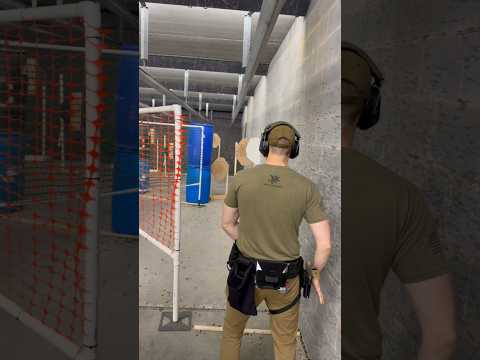
The USPSA Primer for the IDPA Shooter

Published on November 26, 2016
Duration: 26:23

This video provides a comprehensive primer for IDPA shooters transitioning to USPSA, detailing scoring differences, division structures, and strategic approaches. It highlights USPSA's point-based scoring system, emphasizing speed and accuracy, and contrasts it with IDPA's time-plus model. The guide covers Production, Limited, Single Stack, and Open divisions, explaining equipment rules and strategic differences, particularly concerning major vs. minor power factors and magazine capacity. It advises on stage breakdown, target prioritization, and the importance of aggressive shooting and efficient gun handling.

Quick Summary

USPSA uses a hit factor scoring system where total points are divided by time, emphasizing speed. IDPA uses a time-plus model, adding penalties to raw time. USPSA classifiers are graded against the best score ever achieved, making them a percentage-based benchmark, unlike IDPA's fixed standards.

Chapters

  1. 00:05Introduction & Motivation
  2. 00:58USPSA Classification System
  3. 02:11USPSA Scoring vs. IDPA
  4. 02:49USPSA Target Zones & Scoring
  5. 03:16Calculating Hit Factor Example
  6. 03:33USPSA Penalties
  7. 04:48Impact of Bombing Stages
  8. 05:32USPSA Divisions Overview
  9. 05:42Production Division Explained
  10. 06:11Holster Rules: USPSA vs. IDPA
  11. 07:19Limited Division Explained
  12. 08:11Limited Division Philosophy
  13. 09:05Open Division Explained
  14. 09:59Competition Belt Costs & Utility
  15. 11:20Shooting USPSA: Freeform Strategy
  16. 12:08Calling Shots & Target Prioritization
  17. 12:15Steel Targets in USPSA
  18. 13:15Aggressive Approach in USPSA
  19. 13:45USPSA Stage Design Philosophy
  20. 14:48Target Engagement Strategy
  21. 15:39Overall USPSA Experience
  22. 15:43Round Counts & Magazine Needs
  23. 16:21Prize Payouts in USPSA
  24. 16:37Classification Advancement
  25. 17:27Match Procedures (No Pasting)
  26. 17:50IDPA vs. USPSA Skill Equivalence
  27. 18:21Key Differences: Gun Handling & Movement
  28. 18:35Range Commands
  29. 19:04USPSA's Impact on Gun Handling Skills
  30. 19:43USPSA: A Different Style of Shooting
  31. 20:00Stage Breakdown & Optimization
  32. 20:37Stage Strategy: Aiming vs. Running
  33. 20:49Shooting USPSA: Final Thoughts
  34. 21:00USPSA vs. IDPA: Overall Comparison
  35. 21:20Hoser Stages
  36. 21:28Magazine Recommendations
  37. 21:59Production Division Loadout
  38. 22:32Magazine Brush Recommendation
  39. 23:00Single Stack Division Explained
  40. 24:12Open Division: A Different World
  41. 24:32Call to Action & Final Encouragement
  42. 25:12USPSA Rules vs. IDPA Rules
  43. 25:40USPSA: Pure Action Pistol Sport
  44. 26:03Reloading Press Recommendation

Frequently Asked Questions

What is the main difference between USPSA and IDPA scoring?

USPSA uses a hit factor system, dividing total points by time, where speed is paramount. IDPA uses a time-plus model, adding penalties for accuracy issues to the raw shooting time. The lowest total time wins in IDPA, while the highest hit factor wins in USPSA.

How does USPSA classification work compared to IDPA?

USPSA classifiers are graded against the highest score ever achieved for that stage, making your score a percentage of that benchmark. This is different from IDPA, where classification is based on your own performance relative to a fixed standard.

What are the key differences in equipment rules between USPSA and IDPA?

USPSA generally has more liberal rules, especially regarding holster placement and firearm modifications. For example, USPSA allows for more offset in holster positioning compared to IDPA's stricter guidelines.

Which USPSA division is recommended for new shooters transitioning from IDPA?

For new shooters transitioning from IDPA, it's often recommended to start with the Limited division. This allows for higher magazine capacities and helps familiarize oneself with the scoring differences before potentially moving to Production.

What is the strategic advantage of major vs. minor scoring in USPSA?

Major scoring in USPSA offers higher point values for target hits, particularly for 'Charlie' zones (4 points vs. 3 in minor). This allows shooters to be more aggressive and potentially outrun less-than-perfect hits more effectively in major divisions.

More Range & Competition Videos You Might Like

More from TheHumbleMarksman

View all →