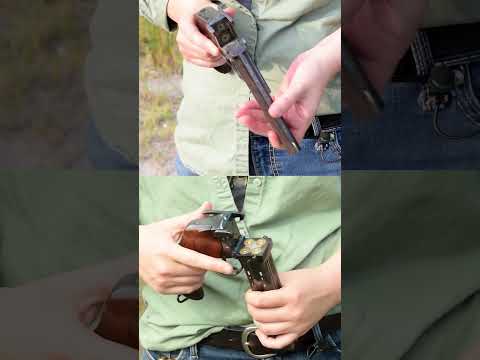
Clips: The Civil War Swiss K31 Revolver

Published on June 20, 2023
Duration: 6:53

This video provides an in-depth look at the unique cylinder rotation mechanism of the Jocelyn revolver, a five-shot, muzzle-loading percussion handgun issued to the Union Army during the Civil War. The presenter highlights how the gun's lockwork, particularly the hand and drum assembly, translates the linear motion of a rod connected to the hammer into the rotation of the cylinder, drawing parallels to the mechanism found in Swiss K31 straight-pull rifles. The video also touches on the revolver's reputation for being problematic in the field, with potential issues stemming from the cylinder-to-barrel boarding and the finicky nature of its side-hammer operation.

Quick Summary

The Jocelyn revolver features a unique cylinder rotation mechanism that translates the linear motion of a rod connected to the hammer into rotational movement of the cylinder via a drum with a diagonal groove, similar to mechanisms found in early straight-pull rifles. This design, patented in 1858, was an attempt to innovate but contributed to the revolver's reputation for being problematic in the field.

Chapters

  1. 00:04Introduction to Jocelyn Revolver Research
  2. 00:22Jocelyn Revolver Overview
  3. 00:54Unique Lockwork and Cylinder Rotation
  4. 01:12Single Action Operation
  5. 01:24Arbor Removal
  6. 01:59Cylinder Removal
  7. 02:16Detailed Look at the Hand Mechanism
  8. 03:53Hammer and Rod Mechanism Explanation
  9. 04:27Drum and Groove Interaction
  10. 04:47Hand Spring and Plunger
  11. 05:15Comparison to Rifle Mechanisms
  12. 05:32Patent Information and Historical Context
  13. 06:03Jocelyn's Other Inventions
  14. 06:24Conclusion and Future Content

Frequently Asked Questions

What makes the Jocelyn revolver's cylinder rotation mechanism unique?

The Jocelyn revolver's cylinder rotation is unique because it translates the linear motion of a rod connected to the hammer into rotational movement of the cylinder via a drum with a diagonal groove, similar to mechanisms found in early straight-pull rifles.

Why is the Jocelyn revolver considered a problematic firearm from the Civil War era?

The Jocelyn revolver is notorious for being problematic due to issues with how the cylinder was bored relative to the barrel and the finicky nature of its side-hammer operation, leading to reliability concerns in the field.

What are the potential causes for the Jocelyn revolver's indexing failures?

Indexing failures in the Jocelyn revolver are often attributed to the small channel for the hand's piston, which can easily clog with black powder fouling. If this piston gets stuck, it prevents the cylinder from rotating to the next chamber.

How does the hand mechanism work on the Jocelyn revolver?

The hand is a spring-loaded plunger that, as the hammer is cocked, engages a drum with a diagonal groove. This interaction causes the cylinder to rotate, and a bias on the hand prevents backward rotation during firing.

More Reviews Videos You Might Like

More from C&Rsenal

View all →