From Tom's Vault | Rare P38s

Published on May 27, 2026
Duration: 17:04

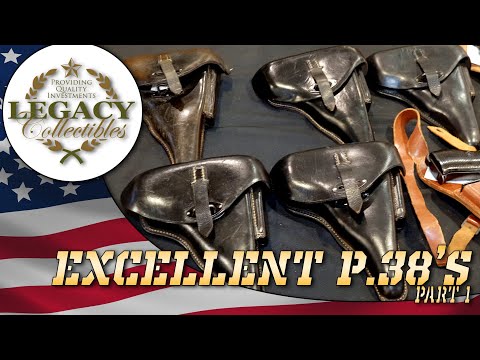
This video showcases a rare collection of Walther P38 pistols, focusing on early and late production models with unique features. The presenter, an experienced collector, details variations from Swedish contracts and experimental aluminum frames to late-war Mauser and Spreework production. Key insights include identifying manufacturing differences, proof marks, and the historical context of these firearms.


Quick Summary

Early Walther P38 pistols from 1940 often showcase unique grip designs and high-polish blue finishes. Experimental variants, such as those with aluminum frames, are rare and may lack standard military proof marks, instead bearing test firing proofs.

Chapters

  1. 00:00Introduction & Thinning the Herd
  2. 00:23P38 Manufacturing Order: Early vs. Late
  3. 00:72Second Contract Swedish P38 (1940)
  4. 01:48Experimental P38 with Aluminum Frame
  5. 02:42Walther P38 AC 41 (Second Variation)
  6. 03:17Walther P38 AC 41 (First Variation)
  7. 04:17Walther P38 AC 41 (Later Variation, Matte Finish)
  8. 04:47Mauser BYF 43 (Dust Blue Finish)
  9. 05:49Mauser BYF 44 Police (Eagle L)
  10. 06:14Mauser BYF 44 Dual Tone
  11. 06:41Mauser BYF 44 (AC Marking, Armorer's Replacement)
  12. 07:30Spreework CYQ (Late War, Cog Hammer)
  13. 08:59Walther AC 45 Dual Tone (Late War)
  14. 09:41Conclusion & Next Video Tease

Frequently Asked Questions

What makes early Walther P38 pistols unique?

Early P38s, particularly those from 1940, often feature unique grip designs and a high-polish blue finish. They may also have specific markings related to their initial contracts, such as Swedish contract variations.

How can one identify an experimental P38?

Experimental P38s, like the aluminum-framed models from around 1940, are rare and may lack standard Waffenstamps. They often have unique material compositions and test firing proofs instead of military acceptance marks.

What is the significance of the asterisk (*) on a P38 slide?

An asterisk on a P38 slide indicates that the component was returned for rework due to quality control issues. After being fixed, it was re-inspected and marked with the asterisk to denote this second pass through inspection.

What are the characteristics of late-war P38 production?

Late-war P38s, produced by Mauser and Spreework, often exhibit dulled finishes, cruder milling marks, and sometimes dual-tone (phosphate and blued) finishes. They also feature specific late-war components like the cog hammer.

More Reviews Videos You Might Like

More from Legacy Collectibles

View all →