History of WWI Primer 044: Greek Colt Army Special & Spanish Copy Documentary

Published on January 31, 2017
Duration: 42:35

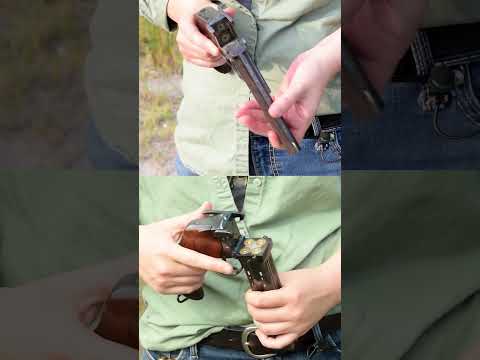
This video provides an in-depth historical and technical analysis of the Colt Army Special revolver and its Spanish copies, particularly the Model 92. It details mechanical differences, safety features like the Positive Lock, and historical military contracts, especially with Greece during WWI. The content is presented with high authority by C&Rsenal, known for their rigorous approach to historical firearms.

Quick Summary

The Colt Army Special, a significant evolution in .38 caliber revolvers, featured a clockwise cylinder rotation for improved accuracy and the 'Positive' lock safety mechanism. While not adopted by the US Army, Greece purchased approximately 26,000 units during WWI. Its Spanish copy, the Model 92, offered a more basic design with distinct ergonomic differences.

Chapters

  1. 00:00Introduction: Colt Army Special & Spanish Copies
  2. 01:21Cylinder Rotation Mechanics: Colt vs. S&W
  3. 03:38James J. Peard & Design Evolution
  4. 05:39The Positive Lock Safety
  5. 07:32Internal Action Analysis
  6. 12:51Greek Military Adoption
  7. 19:04Spanish Model 92 Copy
  8. 25:18Range Testing and Ergonomics
  9. 28:20Historical Legacy and Conclusion

Frequently Asked Questions

What were the key mechanical differences between Colt and Smith & Wesson revolvers discussed in the video?

The video highlights Colt's shift to clockwise cylinder rotation, which improves alignment and accuracy by pressing the cylinder into the frame during firing, a design contrast to earlier methods used by Smith & Wesson.

What safety feature was introduced with the Colt Army Special, and how does it work?

The Colt Army Special features the 'Positive' lock, a hammer block safety designed by George H. Tansley. It prevents the hammer from striking the primer unless the trigger is fully pulled, significantly enhancing firearm safety.

Did the US Army adopt the Colt Army Special, and who were its primary military buyers?

The US Army did not initially adopt the Colt Army Special. However, Greece purchased a substantial quantity, around 26,000 units, during WWI, with facilitation by France.

How does the Spanish Model 92 compare to the Colt Army Special in terms of performance and ergonomics?

While visually similar, the Spanish Model 92 has simplified internals, a lumpy trigger, and an awkward grip angle compared to the Colt Army Special, which is noted for its smooth trigger and excellent sights.

Related News

All News →

More Reviews Videos You Might Like

More from C&Rsenal

View all →