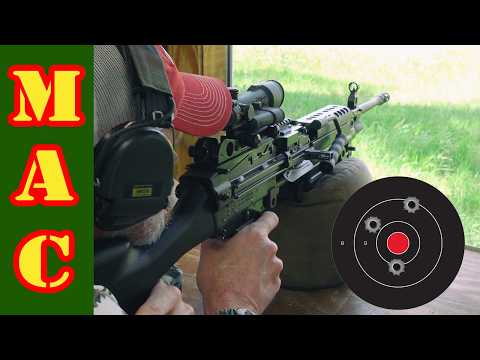
M249 SAW - Billet 2 Bullet

Published on July 20, 2016
Duration: 4:38

This video provides an in-depth look at the M249 SAW, detailing its role in modern warfare and the manufacturing process at FN America. It highlights the distinction between the military's open-bolt M249 SAW and the civilian-legal, closed-bolt M249S, emphasizing the latter's safety features and non-convertibility. The expert-level presentation covers the intricate steps from raw steel billet to a finished firearm, including CNC milling, hammer forging for barrel rifling, and nitration for durability.


Quick Summary

The M249 SAW is a vital Squad Automatic Weapon for infantry, offering superior firepower. Its civilian counterpart, the M249S, is a semi-automatic variant manufactured by FN America, featuring a closed-bolt action for safety and legal compliance. The production process involves advanced techniques like CNC milling and hammer forging for barrels, followed by nitration for enhanced durability.

Chapters

  1. 00:00Modern Warfare Context
  2. 00:33Infantry Role & Firepower Need
  3. 00:57Squad Automatic Weapon Defined
  4. 01:16M249 SAW Introduction
  5. 01:44FN America Plant Visit
  6. 01:57Receiver Manufacturing
  7. 02:15Barrel Manufacturing
  8. 02:30Hammer Forging Process
  9. 03:00Post-Forging Processes
  10. 03:13Surface Treatment & Assembly
  11. 03:30M249 Civilian vs Military
  12. 03:51Acknowledgements

Frequently Asked Questions

What is the primary role of a Squad Automatic Weapon (SAW) in infantry operations?

A Squad Automatic Weapon (SAW) provides crucial extra firepower for an infantry squad, offering a higher volume of fire than standard rifles. This allows soldiers to effectively suppress enemy positions and clear entrenched insurgents, especially in close-quarters combat scenarios.

How is the civilian M249S different from the military M249 SAW?

The key difference is the action type: the military M249 SAW is an open-bolt, fully automatic machine gun, while the civilian M249S is a closed-bolt, semi-automatic rifle. The M249S is designed for safety and legal compliance and is not readily convertible to full-automatic fire.

What advanced manufacturing techniques are used to produce the M249 barrel?

M249 barrels are made using a hammer forging process. After initial shaping and drilling, a hardened carbide mandrel is inserted, and hammers pound the barrel around it, precisely forming the rifling and increasing the barrel's density and rigidity.

What surface treatments are applied to M249 components for durability?

After heat treatment for rigidity, M249 components like receivers and barrels undergo nitration. This electrochemical bath process hardens the outer surface, providing excellent corrosion resistance and increased durability for demanding operational environments.

Related News

All News →

More Reviews Videos You Might Like

More from BurstReview

View all →