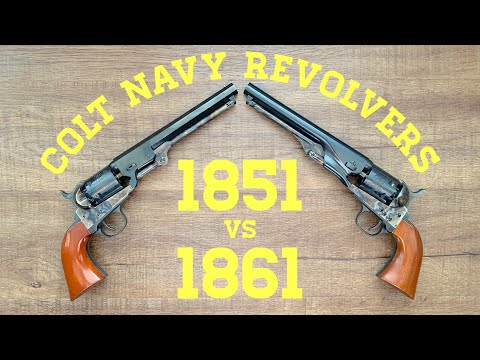
Reprocussion 008: Colt 1851 USA

Published on January 23, 2024
Duration: 71:52

This video provides an in-depth review and historical analysis of the Colt 1851 Navy revolver, often referred to as the 'Belt Model'. It details the firearm's development, US military and naval contracts, commercial sales, and its evolution through various production changes. The review includes practical shooting impressions, comparisons to other Colt models, and discussions on its ergonomics and handling characteristics, highlighting its significance in firearms history.

Quick Summary

The Colt 1851 Navy revolver, or 'Belt Model', is a .36 caliber percussion firearm known for its improved ergonomics and balance compared to larger models. It features a six-round cylinder and was widely adopted by US military and civilian users for personal defense, especially during the mid-19th century.

Chapters

  1. 00:00Introduction: Colt 1851 Navy Overview
  2. 00:13Physical Dimensions and Construction
  3. 00:49Cylinder and Loading Mechanism
  4. 00:59Sponsorship and Resources (Rock Island Auctions)
  5. 01:55Sponsorship and Resources (Ballistol)
  6. 02:42Historical Context: Colt Navy vs. 1851 Model
  7. 03:08Early US Service Pistols: Dragoon Model
  8. 04:05Resistance to Colt's Patents and Pricing
  9. 05:25Development of the Belt Model (1851 Navy)
  10. 06:00Downscaled Dragoon: The .36 Caliber Belt Model
  11. 06:16Army Testing and Initial Disinterest
  12. 07:00Commercial Market Success: California Gold Rush
  13. 08:05Factors Driving Commercial Sales
  14. 08:46Colt's Sales Tactics: Gifting and Influence
  15. 10:43Admiral Perry's Expedition to Japan
  16. 11:03Colt's Factory Expansion: South Meadows
  17. 13:17Patent Extension Battles and Controversy
  18. 15:35Colt's Patent Firearms Incorporation and Russian Contract
  19. 17:22Russian Contract Issues: Confiscation in Prussia
  20. 18:44US Army Contracts: The 1855 Order
  21. 19:32US Army Officers' Preference for Belt Models
  22. 20:10Specifications: Brass vs. Iron Grips
  23. 21:21US Army Order Details: Ordinance Department Marking
  24. 22:16Shooting Demonstration: Colt 1851 Navy
  25. 24:46Loading and Firing: Cartridges vs. Loose Powder
  26. 25:10US Government Purchases: Pre-War Contracts
  27. 25:24Ordnance Department's Price Negotiations
  28. 27:05Alternative Revolvers: Beaumont Adams
  29. 28:02Price Wars: Colt vs. Ordnance Department
  30. 29:27Arming Commercial Interests: Russell, Majors, Waddell
  31. 30:30Controversial Armament Issues: Secretary Floyd
  32. 31:56Pre-War Army Use of the .36 Caliber
  33. 32:12Texas and Other Contracts
  34. 32:34Identifying Navy Colts
  35. 33:20US Navy Contracts: 1857-1859
  36. 34:12Navy Colt Specifications and Evolution
  37. 35:26Colt's New Models: 1860 Army and Improved Navy
  38. 36:06Civil War Mobilization and Colt's Prices
  39. 37:28Owen Holt Commission and Price Reductions
  40. 38:08End of Official Sales to US Navy
  41. 38:16Tracking War Purchases: Challenges and Estimates
  42. 38:46Continued Production and Improvements (1862-1863)
  43. 39:12Civil War Demand and Private Sales
  44. 39:38Common Complaint: Barrel Bursting
  45. 40:05Total Production Numbers: Belt Models
  46. 40:21Looking Ahead: Samuel Colt's Empire
  47. 40:28May's Opinion: Comparing Colt Models
  48. 40:44The 'Mama, Papa, Baby' Analogy: Dragoon, Navy, Pocket
  49. 41:13Collector Classifications vs. Manufacturer Changes
  50. 42:30The 'Belt Model' vs. 'Holster Model' Debate
  51. 43:41Handling the Colt Dragoon (.44 Caliber)
  52. 45:54Handling the Colt Pocket Model (.31 Caliber)
  53. 48:10Comparing Navy vs. Pocket Model for Combat
  54. 48:47Competition: Adams and Beaumont Revolvers
  55. 49:12Ergonomics of the Colt 1851 Navy Grip
  56. 50:00Shooting the Colt 1851 Navy: Hammer and Trigger
  57. 51:31Hammer Cocking Techniques
  58. 52:23Grip Comfort and Balance of the Navy Model
  59. 53:53Barrel Length and Sight Radius Considerations
  60. 54:58Shooting Impressions: Recoil and Trigger
  61. 55:31Comparison to Triple-Action Revolvers
  62. 57:08Cartridge Technology: Thumb-In vs. Tear-Away
  63. 57:17Using Paper Cartridges for the Colt 1851 Navy
  64. 58:39Advantages of Cartridge Loading
  65. 1:00:03Loading Process: Loose Powder vs. Cartridges
  66. 1:03:08Loading with Cartridges: Ease and Speed
  67. 1:04:03Hammer Safety: Manual Decocker System
  68. 1:05:14Hammer Safety Comparison: Colt vs. Single Action Army
  69. 1:06:13Final Thoughts: Ergonomics and Evolution
  70. 1:06:23Preference: Brass vs. Iron Grips

Frequently Asked Questions

What are the key specifications of the Colt 1851 Navy revolver?

The Colt 1851 Navy, also known as the 'Belt Model', is typically 13 inches long, weighs over 2.5 lbs, and features a six-round, .36 caliber cylinder. Its trigger guard and backstrap are usually made of brass, and it was a popular firearm for personal defense in the mid-19th century.

How was the Colt 1851 Navy used by the US military?

The US Army began ordering the Colt 1851 Navy in 1855, with significant contracts for both Army and Navy units occurring in the late 1850s. Officers favored it for its handiness and effectiveness compared to larger revolvers.

What are the advantages of using paper cartridges with the Colt 1851 Navy?

Using paper cartridges for the Colt 1851 Navy offers a faster and cleaner reloading process compared to handling loose powder and balls. It simplifies the loading sequence into a single motion, reducing the potential for errors and spillage.

What safety features does the Colt 1851 Navy have?

The Colt 1851 Navy has a manual decocker system where the hammer can be carefully lowered onto a capped nipple or between nipples. This prevents the cylinder from rotating and the trigger from engaging, offering a degree of safety.

Why is the Colt 1851 Navy considered an improvement in ergonomics?

The Colt 1851 Navy's grip is considered an ergonomic improvement over larger models like the Dragoon. It offers better balance, reduced muzzle heaviness, and a more comfortable feel in hand, making it easier to handle and point.

More Reviews Videos You Might Like

More from C&Rsenal

View all →