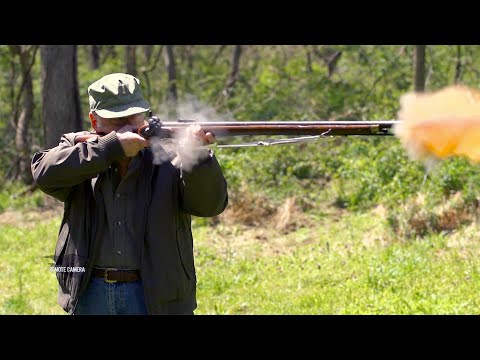
The emergency Crimean cavalry carbine. With firearm and weapons expert, Jonathan Ferguson

Published on February 23, 2022
Duration: 16:22

This video provides an in-depth look at the Green Carbine, an innovative breech-loading firearm developed by James Jarrell Green. Expert Jonathan Ferguson details its unique capping breech-loading mechanism, including the Maynard tape primer and a novel obturation system designed to prevent gas escape. The carbine's history, its limited adoption by British cavalry during the Crimean War due to cartridge issues, and its performance trials against other contemporary carbines are discussed. The presentation highlights the carbine's advanced features for its time, such as its effective rate of fire and accuracy.

Quick Summary

The Green Carbine, invented by James Jarrell Green, was an innovative capping breech-loader designed for cavalry. Its key feature was a movable obturator for sealing the breech, preventing gas escape and maintaining velocity. Despite successful trials showing superior accuracy and a 10-round-per-minute rate of fire, issues with cartridge development limited its widespread adoption.

Chapters

  1. 00:04Introduction to the Green Carbine
  2. 00:14Inventor and Type: James Jarrell Green, Capping Breech Loader
  3. 00:36Ignition System: Percussion Caps and Maynard Tape Primer
  4. 01:19Maynard Tape Primer vs. Model 1855 Springfield
  5. 01:49British Entry into Crimean War and Need for Breech Loaders
  6. 02:02Emergency Purchase and Troop Trials
  7. 02:24Cavalry Need for Modern Arms vs. Victoria Carbine
  8. 02:43Demonstration: Loading and Operating the Breech
  9. 03:19Detail of the Breech: Second Piercing Nipple
  10. 04:05Function of the Piercing Nipple
  11. 04:33Unique Obturation Feature Explained
  12. 05:05Patent Details: Movable Obturator Section
  13. 06:00Gas Escape Problem and Obturation
  14. 06:34Green's Obturation System Success
  15. 06:43Hythe Trials: Accuracy and Comparison
  16. 07:18No Gas Escape and Reliability
  17. 07:34Rate of Fire and Trial Conclusion
  18. 07:47Order of 2,000 Carbines
  19. 07:50British Pattern Markings: Proof Marks and Royal Cipher
  20. 08:32Manufacturer and Date: Massachusetts Arms Company, 1856
  21. 08:40Unit Markings: First Class Reserve
  22. 08:53Initial Deployment Plan vs. Reality
  23. 09:09Cartridge Issues: Paper vs. Skin/Linen
  24. 09:46Limited Issuance: Royal Cape Mounted Rifles
  25. 09:54Royal Devon Mounted Rifles (RDMR) Marking
  26. 10:23Status: Neither Prototype Nor General Issue
  27. 10:43Yeomanry Units and Usage
  28. 11:14British Adoption of Wesley Richards System
  29. 11:35A 'Nearly Made It' Firearm
  30. 11:43Two Examples: Different Histories
  31. 11:52Disposal of Tower of London Stock
  32. 12:06Sold Out of Service Markings
  33. 12:32Transfer to Pattern Room Collection at Enfield
  34. 12:42Tower of London Example: Harder Life
  35. 13:01Reunification of Collections
  36. 13:07Differences in American vs. British Greens
  37. 13:23Barrel Length Reduction
  38. 13:43Caliber Reduction (Alleged)
  39. 14:04Patch Boxes: Purpose and Function
  40. 15:03Sights: Combat and Adjustable
  41. 15:17Realistic Sighting Range
  42. 15:48Conclusion and Channel Outro

Frequently Asked Questions

What is the Green Carbine and who invented it?

The Green Carbine is a capping breech-loading firearm invented by James Jarrell Green, an American army officer. It was designed to provide cavalry with a more modern and efficient weapon than the muzzle-loading carbines of the era.

How does the Green Carbine's breech-loading mechanism work?

The Green Carbine features a unique breech-loading system where the breech block is rotated and slid forward to open. It can be ignited using percussion caps on a nipple or a Maynard tape primer system, which pierces a roll of caps.

What was the significance of the obturator in the Green Carbine?

The Green Carbine incorporated a novel obturator, a movable component at the breech that sealed against gas escape upon firing. This feature was crucial for maintaining projectile velocity and preventing dangerous gas jetting.

Why was the Green Carbine not widely issued to British cavalry despite successful trials?

Although trials showed the Green Carbine to be accurate and reliable, its widespread adoption was hindered by issues with developing a suitable paper cartridge. By the time the carbines were ready, the Crimean War had ended, and the British military sought more robust ammunition solutions.

What were the performance characteristics of the Green Carbine during trials?

During trials at Hythe, the Green Carbine demonstrated superior accuracy up to 400 yards compared to other contemporary carbines. It also achieved an effective rate of fire of 10 rounds per minute with no gas escape at the breech, even after extensive firing without cleaning.

More Reviews Videos You Might Like

More from Royal Armouries

View all →