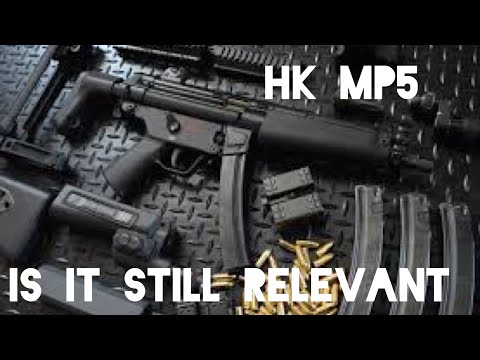
The HK Sub Gun You Forgot About

Published on November 21, 2025
Duration: 41:30

This video delves into the history and technical specifications of the HK SMG1 and SMG2, two lesser-known submachine gun prototypes developed for the US Navy in the 1980s. It features live-fire demonstrations, cyclic rate testing, and detailed comparisons with iconic HK firearms like the MP5 and MP5K, offering insights into their design evolution and potential. The content highlights advanced features for the era, such as suppressor integration and ambidextrous controls, positioning these as transitional designs leading to the UMP.

Quick Summary

The HK SMG1 and SMG2 were experimental submachine guns developed in the 1980s for the US Navy. The SMG1 achieved a cyclic rate of 1,040 RPM, while the SMG2 reached an astonishing 1,384 RPM, utilizing a simple blowback system. Despite innovative features, they were ultimately passed over in favor of modified MP5s.

Chapters

  1. 00:00Introduction: Iconic HK SMGs
  2. 00:34The 1980s Navy Solicitation
  3. 00:57Birth of SMG1 and SMG2
  4. 01:14Rare Footage: SMG1 & SMG2 Firing
  5. 02:22Back to the Range: SMG1 & SMG2
  6. 03:03Unseen Footage: Shooting SMG1 & SMG2
  7. 05:09Sponsor: National Armory
  8. 06:33Fascinating Gun: SMG1 History
  9. 06:52SMG1: Successor to the MP5
  10. 07:34US Navy Requirements: 1980s
  11. 08:36SMG1 Design Features
  12. 09:13Bolt Hold Open Capability
  13. 09:53Ambidextrous Controls
  14. 10:31Updated Sighting System
  15. 11:14Suppressor Integration
  16. 12:20Elongated Trigger Guard & Winter Trigger
  17. 12:54Telescoping Buttstock & Advanced Sights
  18. 13:57Forward Thinking for 1982
  19. 14:41Transition to the Range
  20. 14:51Range Day: Filming SMG1 & SMG2
  21. 15:35Limited Rounds: Cyclic Rate Test Plan
  22. 16:31Baseline Test: MP5 Cyclic Rate
  23. 18:10MP5 Cyclic Rate: 807 RPM
  24. 18:29Baseline Test: MP5K Cyclic Rate
  25. 19:06MP5K Cyclic Rate: 895 RPM
  26. 19:12Projection for SMG1
  27. 19:45Live Fire: SMG1
  28. 20:08SMG1 Cyclic Rate: 1,040 RPM
  29. 21:12SMG1 Shooting Impressions
  30. 22:05Back to the Gray Room: SMG2 History
  31. 22:11SMG2: Nuanced Upgrades
  32. 22:33Delta Force Feedback & SMG2 Development
  33. 23:11SMG2 Design Changes: Polymer Magazine
  34. 23:49SMG2 Sighting System & Burst Function
  35. 24:42SMG2 Suppression System Explained
  36. 26:02Lever vs. Leverage Discussion
  37. 27:27SMG2 System: Throw of a Lever
  38. 29:07To the Range: SMG2
  39. 29:45SMG2 Cyclic Rate Guess
  40. 30:08SMG2 Test Mode: Super Unsuppressed
  41. 31:08Live Fire: SMG2
  42. 31:32SMG2 Cyclic Rate: 1,384 RPM
  43. 32:03SMG2 Shooting Impressions
  44. 32:41SMG2 Three Round Burst Test
  45. 33:16Reconsidering SMG1 & SMG2
  46. 33:45What Happened to SMG1 & SMG2?
  47. 34:15The MP5 Navy
  48. 35:31Maritime Coating
  49. 36:41SMG as Transitional Design
  50. 37:03Moving Away from Stamped Steel
  51. 37:25Other Prototype Programs (PIP, MP2000)
  52. 37:49UMP vs. Earlier Designs (Caliber, Materials)
  53. 38:30Final Thoughts on SMG1 & SMG2
  54. 39:03MP5 Longevity vs. SMG Potential
  55. 39:42More Info: Vicer's Guide Volume 2
  56. 40:09Type 1 vs. Type 2 Prototypes
  57. 41:05Conclusion & Outro

Frequently Asked Questions

What were the HK SMG1 and SMG2 developed for?

The HK SMG1 and SMG2 were developed in the 1980s as potential successors to the MP5 for US Navy Special Warfare. They aimed to incorporate product improvements and new features requested by the Navy, such as enhanced ergonomics and suppressor integration.

What is the cyclic rate of the HK SMG1 and SMG2?

In live-fire tests, the HK SMG1 achieved a cyclic rate of 1,040 rounds per minute. The HK SMG2 demonstrated an even higher rate of 1,384 rounds per minute, significantly faster than the MP5 and MP5K.

What operating system do the HK SMG1 and SMG2 use?

Unlike the MP5's roller-delayed blowback, the HK SMG1 and SMG2 utilize a simpler blowback operating system. This design choice was a step towards future polymer-based firearms like the UMP.

Why were the HK SMG1 and SMG2 not adopted by the US Navy?

Despite their advanced features, the US Navy ultimately preferred the familiar and proven MP5 platform. They requested modifications to the MP5, resulting in the MP5 Navy variant, rather than adopting the entirely new SMG1 and SMG2 designs.

More Reviews Videos You Might Like

More from 1911 Syndicate

View all →