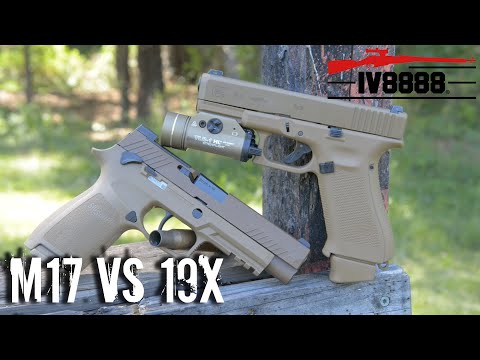
The New Sig P320 M17 Edition Review

Published on October 8, 2018
Duration: 17:33

The Sig P320 M17, originating from the U.S. Army's MHS program, features a Coyote Tan finish, ambidextrous safety, and optic-ready slide. While its high bore axis can increase muzzle flip, the grip angle aids quick sight acquisition. The firearm proved reliable in testing, though a slide bite incident was noted. Its modular trigger pack allows for easy grip swaps.

Quick Summary

The Sig P320 M17, developed for the U.S. Army's MHS program, features a Coyote Tan frame, ambidextrous safety, and optic-ready slide. It offers good shooting performance with quick sight recovery despite its bore axis, and proved reliable in testing.

Chapters

  1. 00:00Intro & MHS History
  2. 01:07M17 Features & Variants
  3. 01:52Shooting Performance & Ergonomics
  4. 04:07Bore Axis & Recoil Analysis
  5. 05:27Reliability & Handling Issues
  6. 09:52Addressing Controversies
  7. 12:23Technical Specs & Modularity

Frequently Asked Questions

What is the origin of the Sig P320 M17?

The Sig P320 M17 originated from the U.S. Army's Modular Handgun System (MHS) solicitation, aiming to replace the aging Beretta M9 pistol. Sig Sauer won the contract in January 2017.

What are the key features of the Sig P320 M17?

The M17 variant features a Coyote Tan frame, a PVD-coated slide with M17 markings, an optic-ready cut, ambidextrous manual safety, and a 4.7-inch barrel.

How does the Sig P320 M17 perform during shooting?

The P320 M17 offers impressive accuracy and a good trigger. Despite a high bore axis, its grip angle aids in quick sight recovery, making follow-up shots efficient.

Is the Sig P320 M17 reliable?

Yes, the P320 M17 proved reliable during testing, handling a high round count without malfunctions. However, new magazines can be stiff, and a slide bite incident was noted.

Related News

All News →

More Reviews Videos You Might Like

More from TFB TV

View all →