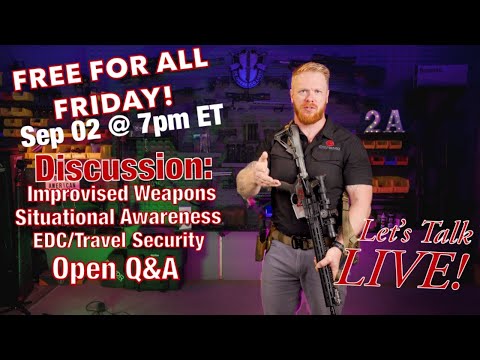
Can You Brandish a Firearm to Deescalate / Avoid Getting Punched? | Instructor Mike

Published on February 10, 2021
Duration: 5:36

Instructor Mike explains the legal and tactical considerations of brandishing a firearm for de-escalation. He emphasizes that lawful justified force requires an imminent threat of death or great bodily harm. The instructor stresses the importance of assessing an attacker's skill sets, even if unarmed, and the potential legal ramifications of drawing a firearm, noting it does not guarantee immunity from arrest or jail.

Quick Summary

Brandishing a firearm for de-escalation is legally permissible when used to prevent an imminent threat of death or great bodily harm. It requires demonstrating lawful, justified force. Understanding attacker capabilities, even if unarmed, and using clear verbal commands are crucial steps before resorting to lethal force.

Chapters

  1. 00:00Brandishing for De-escalation
  2. 00:07Maintaining Firearm Control
  3. 00:10Non-Criminal Intent
  4. 00:14Lawfully Justified Force
  5. 00:21Imminent Threat Definition
  6. 00:37Statutory Language Analysis
  7. 00:42Plain English: Imminent & Prevent
  8. 00:57Assessing Threat Level
  9. 01:08Beyond Obvious Threats
  10. 01:15Unforeseen Encounters
  11. 01:29Unarmed Assailants
  12. 01:36Assessing Skill Sets
  13. 01:42Martial Arts & Fighting Styles
  14. 01:54Non-Traditional Stances
  15. 02:00Relaxed State Attacks
  16. 02:10Launching the Attack
  17. 02:15Assessment Needs
  18. 02:20Understanding Combat
  19. 02:36Justifying Firearm Draw
  20. 02:43Perceived Safety vs. Reality
  21. 02:52Defending Yourself & Lawyer
  22. 03:03Legal Ramifications
  23. 03:09Firearm Defense & Jail
  24. 03:24False Arrests
  25. 03:27De-escalation Example
  26. 03:39Brandishing Without Pointing
  27. 03:47De-escalation Goal
  28. 03:51Skill Set Limitations
  29. 03:58Physical Stamina Analysis
  30. 04:14Avoiding Prolonged Fights
  31. 04:17Societal Beliefs vs. Reality
  32. 04:23Pulling Firearm Timing
  33. 04:30Last Option, First Action
  34. 04:36Scenario: Two Assailants
  35. 04:46Creating Distance
  36. 04:55Verbal Commands Strategy
  37. 05:02Escalation to Force
  38. 05:07Lethal Force Justification
  39. 05:11Multiple Assailants Threat
  40. 05:14Weapon Disarmament Risk
  41. 05:22Post-Incident Legal Counsel
  42. 05:29Experience-Based Advice

Frequently Asked Questions

Can brandishing a firearm legally de-escalate a situation?

Brandishing a firearm can be a legal de-escalation tactic if it's done to prevent an imminent threat of death or great bodily harm. The key is demonstrating lawful, justified force, not aggression. It requires careful assessment of the situation and the attacker's intent and capability.

What are the legal requirements for using a firearm in self-defense?

Self-defense with a firearm requires an imminent threat of death or great bodily harm. The force used must be proportionate to the threat. Simply drawing a weapon does not guarantee immunity from arrest or legal consequences; you must be able to justify your actions.

How should one assess the threat from an unarmed attacker?

Even unarmed individuals can pose a significant threat. Assess their physical capabilities, fighting skills, and aggressive intent. Some fighting styles don't require traditional stances, making threat assessment more complex and requiring heightened situational awareness.

What verbal commands are effective during a de-escalation attempt with a firearm?

Effective verbal commands should be clear, concise, and direct. Examples include 'Back up,' 'Don't want to shoot,' 'Leave me alone,' and 'Move away.' These commands aim to create distance and deter further aggression before resorting to lethal force.

More Self Defense Videos You Might Like

More from Instructor Mike

View all →