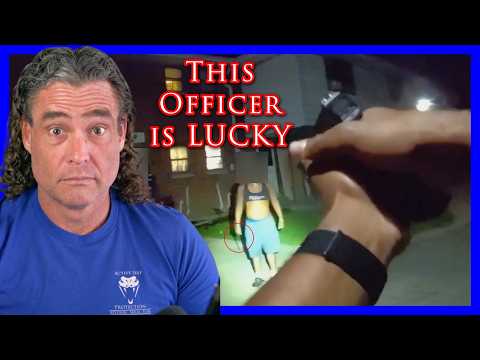
Bellevue Officers Must React Fast To Survive Ambush

Published on March 31, 2026
Duration: 22:46

This video analyzes a critical incident where Bellevue officers responded to a domestic disturbance that escalated into a knife attack. It highlights the importance of rapid reaction time, effective close-quarters defense against edged weapons, and tactical decision-making under extreme duress. The analysis emphasizes that even trained officers can be caught off guard and underscores the need for continuous training in unpredictable scenarios, including fighting from compromised positions and understanding the limitations of body armor against stabbing attacks.


Quick Summary

Key lessons from the Bellevue officer knife attack include the critical importance of reaction time, the difficulty of knife defense, and the need to maintain orientation to the threat. Officers must prioritize threat neutralization over immediate aid to injured partners and train for compromised positions, as standard body armor is not stab-rated.

Frequently Asked Questions

What are the key tactical lessons from the Bellevue officer knife attack incident?

Key lessons include the critical importance of reaction time, the difficulty of knife defense, the need to maintain orientation to the threat, and prioritizing threat neutralization over immediate aid to injured partners. It also highlights the limitations of body armor against stabbing and the necessity of training for compromised positions.

How should officers respond to a close-range knife attack?

Immediate defensive actions like intercepting the weapon, using strikes to the attacker's arm, and getting to the ground to get below the knife's reach are crucial. Officers must also train for drawing and engaging from non-standard positions and maintain orientation to the threat.

What are the limitations of police body armor against knife attacks?

Standard bullet-resistant vests, like Level IIIA, are typically not stab-rated and offer minimal protection against knives. Dedicated stab vests exist but do not protect against bullets. Officers should not rely on their vests for protection against edged weapons.

Why is it important for officers to train for compromised positions during a knife encounter?

Officers may be forced to the ground or into other disadvantageous positions during a knife attack. Training for drawing and engaging from these compromised states, such as from the ground, is vital for survival and effective threat cessation.

More Self Defense Videos You Might Like

More from Active Self Protection

View all →