GUNTALK S5: First Person Defender - Power of Observation, Pt 4

Published on September 25, 2015
Duration: 5:47

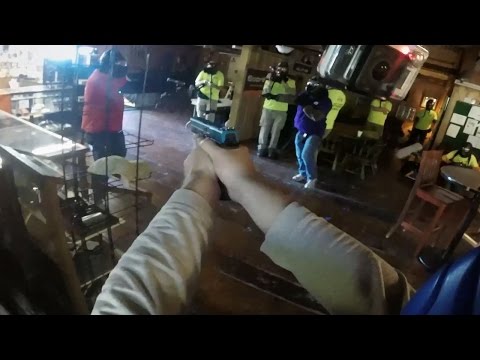
This video demonstrates a critical self-defense technique focusing on the 'Power of Observation' during a sudden threat. It emphasizes scanning your surroundings before drawing a firearm, creating distance, and executing a concealed draw without telegraphing your actions. The training highlights the importance of continuous situational awareness and threat assessment in dynamic scenarios, moving beyond simple weapons manipulation to tactical application.

Quick Summary

In a self-defense scenario, immediately scan your surroundings (360 degrees) before drawing a firearm to identify all threats and assess the situation. Perform a concealed draw with minimal upper body movement, focusing on smooth, controlled actions. Continuous scanning after engagement is crucial for detecting secondary threats.

Chapters

  1. 00:01Introduction & Sponsors
  2. 00:11Setting up the Training Scenario
  3. 00:35Simulating a 'Stickup' Threat
  4. 00:40Avoiding Telegraphing the Draw
  5. 00:52Importance of Scanning Surroundings
  6. 01:03Creating Distance and Cover
  7. 01:14Concealed Draw Technique
  8. 01:21Engage, Breathe, Scan
  9. 01:32Scenario 1 Debrief
  10. 02:01Practicing the Scan and Draw
  11. 02:34Scenario 2 Setup Changes
  12. 02:47Scenario 2 Roleplay Dialogue
  13. 03:17Scenario 2 Threat Announcement
  14. 03:41Scenario 2 Engagement
  15. 03:56Scenario 2 Debrief and Analysis
  16. 04:13Cover Operator's Perspective
  17. 04:37Head on a Swivel
  18. 04:53Value of Force on Force Training
  19. 05:15Conclusion and Takeaways

Frequently Asked Questions

What is the primary tactical advantage of scanning your surroundings before drawing a firearm in a self-defense situation?

Scanning your surroundings before drawing a firearm allows you to identify all potential threats, including accomplices, and assess the overall situation. This prevents you from being surprised by additional threats and informs your tactical decisions, such as creating distance or seeking cover.

How should one perform a concealed firearm draw to avoid alerting an attacker?

To avoid alerting an attacker, the draw should focus on removing the gun from the holster with minimal upper body movement, particularly in the shoulders and elbows. The motion should be smooth and controlled, allowing the firearm to come up without telegraphing your intent.

Why is continuous scanning important even after engaging a threat?

Continuous scanning after engaging an immediate threat is vital because active threats often operate in groups or have accomplices. It ensures you are aware of any secondary threats or evolving dangers in your environment, allowing you to react appropriately and maintain safety.

What is the benefit of force-on-force training for self-defense?

Force-on-force training provides a realistic, high-stress environment to practice tactical decision-making and apply defensive skills under pressure. It goes beyond simple weapons manipulation, allowing individuals to experience dynamic scenarios and refine their ability to react effectively.

Related News

All News →

More Self Defense Videos You Might Like

More from Gun Talk Media

View all →