20mm VS AR500 Steel

Published on March 28, 2018
Duration: 3:55

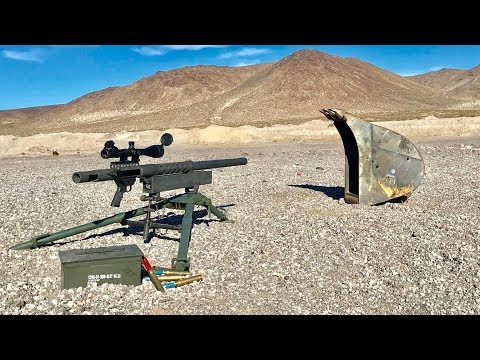
This video demonstrates a high-caliber ballistic test comparing a 20mm round fired from a Serbu 20mm Rifle against a 1-inch AR500 steel plate. The test, conducted by Edwin Sarkissian, shows that despite the massive power of the 20mm round, it did not penetrate the AR500 steel, and surprisingly, showed less penetration than a .50 BMG round in previous tests. This highlights the effectiveness of AR500 steel against even extremely powerful projectiles and the complex factors influencing ballistic performance.


Quick Summary

In a ballistic test, a 20mm Armor Piercing Tracer round fired from a Serbu 20mm Rifle failed to penetrate 1-inch AR500 steel. The impact caused the steel plate to spin, but surprisingly, it showed less penetration effect than a .50 BMG round from prior tests, highlighting the effectiveness of AR500 steel and projectile surface area.

Chapters

  1. 00:00Target Introduction
  2. 00:47Weapon and Ammo Selection
  3. 01:30The Shot
  4. 02:16Damage Assessment

Frequently Asked Questions

What was tested against the AR500 steel plate?

A 20mm Armor Piercing Tracer round fired from a Serbu 20mm Rifle was tested against a 1-inch thick AR500 steel plate in a desert shooting range environment.

Did the 20mm round penetrate the AR500 steel?

No, the 20mm round did not penetrate the 1-inch AR500 steel plate. It caused the plate to spin but did not create a hole or significant breach.

How did the 20mm round compare to a .50 BMG round on AR500 steel?

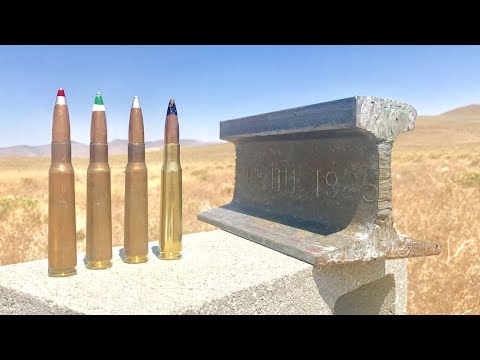
Surprisingly, the 20mm round showed less penetration effect on the AR500 steel than a .50 BMG armor-piercing round from previous tests, likely due to the 20mm's larger surface area and the steel's hardness.

What type of ammunition was used in the 20mm rifle?

The ammunition used was a 20mm Armor Piercing Tracer round, identified by its black tip, fired from the Serbu 20mm Rifle.

More Tactical & Gear Videos You Might Like

More from Edwin Sarkissian

View all →