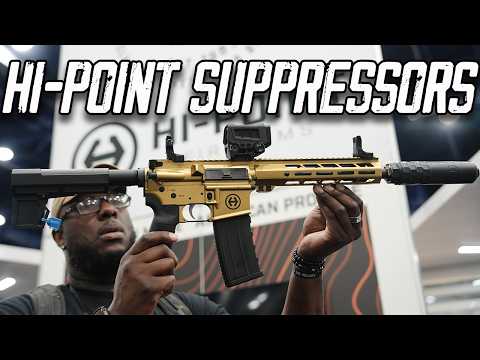
A Overview of Firearm Suppressors / Silencers

Published on September 13, 2017
Duration: 6:04

This video provides a foundational overview of firearm suppressors (silencers), covering their legal status under the NFA, associated costs and wait times, and key purchasing considerations. It details material choices like stainless steel, titanium, and Inconel, explaining their impact on cost and performance. The guide also differentiates between direct thread and muzzle device attachment systems, highlights the necessity of a booster for pistol suppressors, and emphasizes the importance of multi-caliber ratings for versatility. User-serviceable versus sealed designs and the role of ammunition type (supersonic vs. subsonic) in suppressor effectiveness are also discussed.

Quick Summary

Firearm suppressors, or silencers, are regulated under the NFA, requiring a $200 tax stamp and a six-month wait. Material choice (stainless steel, titanium, Inconel) impacts cost and performance. Options include direct thread or muzzle device attachment, with pistol suppressors needing a booster for cycling. Multi-caliber ratings are recommended for versatility, and subsonic ammunition is key to achieving true quietness.

Chapters

  1. 00:10Introduction to Suppressors & NFA
  2. 00:35Mission & Purpose of Suppressors
  3. 00:51Suppressor Materials: Cost vs. Performance
  4. 01:14Direct Thread vs. Muzzle Device Attachment
  5. 01:31Pistol Suppressor Boosters
  6. 01:45Muzzle Devices for Suppressors
  7. 02:05Caliber Selection & Multi-Caliber Ratings
  8. 02:36.22LR Suppressor Fouling & Serviceability
  9. 02:54Surefire SOCOM 7.62 Mini Example
  10. 03:22Caliber Limitations & Barrel Length
  11. 03:43How Suppressors Work: Baffles & Volume
  12. 03:55Are Suppressors Truly Silent?
  13. 04:02Supersonic vs. Subsonic Ammunition
  14. 04:15Demonstration: Suppressed vs. Unsuppressed
  15. 04:54Pistol Suppressor Demo: Supersonic vs. Subsonic
  16. 05:22Benefits of Suppressors: Hearing Protection & Communication
  17. 05:44Conclusion & Final Thoughts

Frequently Asked Questions

What are the legal requirements for owning a firearm suppressor in the US?

In the US, firearm suppressors are regulated under the National Firearms Act (NFA). Owning one involves a lengthy wait time, typically around six months, and requires the purchase of a $200 tax stamp.

What materials are commonly used in firearm suppressors and how do they affect cost?

Common suppressor materials include stainless steel, which is generally less expensive, and lighter, more heat-resistant materials like titanium or Inconel. These advanced materials are more costly due to their superior performance and manufacturing difficulty.

What is the difference between direct thread and muzzle device attachment for suppressors?

Direct thread suppressors screw directly onto a threaded barrel. Alternatively, suppressors can attach to a muzzle device, such as a flash hider or muzzle brake, which is pre-installed on the firearm's barrel.

Do suppressors make firearms completely silent?

No, suppressors do not make firearms completely silent, contrary to popular media portrayals. While they significantly reduce noise and muzzle flash, supersonic ammunition will still produce a 'crack.' Subsonic ammunition is necessary to eliminate this sound.

Related News

All News →

More Tactical & Gear Videos You Might Like

More from Kit Badger

View all →